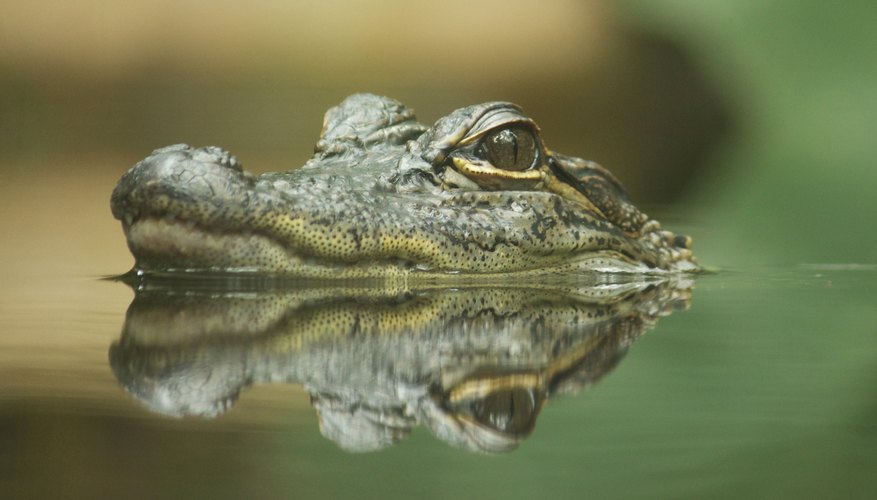
Amazing creatures: the Crocodile

Image result for crocodile body features

Giant, scaly, stealthy, toothy, prehistoric – these are all words that describe crocodiles and their friend alligators. These reptiles have been around for 240 million years, even older than hippos I talked about a few days ago. They have evolved into lean, mean, killing machines over the last few millennia.

GENERAL STATS : in order to survive at the same time as the dinosaurs, they must have been pretty amazing and tough. A Saltwater croc is the largest reptile – up to 7 meters long and weighing up to one ton at largest. They can actually live pretty long lives, living about 70 years. However, most hatchlings (99%) die early on in their lives. Luckily, the ones that live become apex predators.

BODY FEATURES: Crocodiles have adapted to their environment for almost 250,000,000 years. So, of course, they have many awesome body features that they have evolved.

Crocodiles have the strongest bite of any animal in the world, as I have talked about in previous blogs. They have up to 34 teeth per jaw, clamping for clamping down and ripping apart prey. When swimming, their nostrils close and they have actually very sensitive ear flaps. Their skin is very tough. So strong, in fact, that the ancient romans used crocodile skin as armour. After all, it could block old-fashioned bullets! To help them swim, crocs also have a tail made nearly entirely out of muscle and a smooth underside to slide across the riverbed. They short, stubby legs help them steer, but don’t work very well on land.
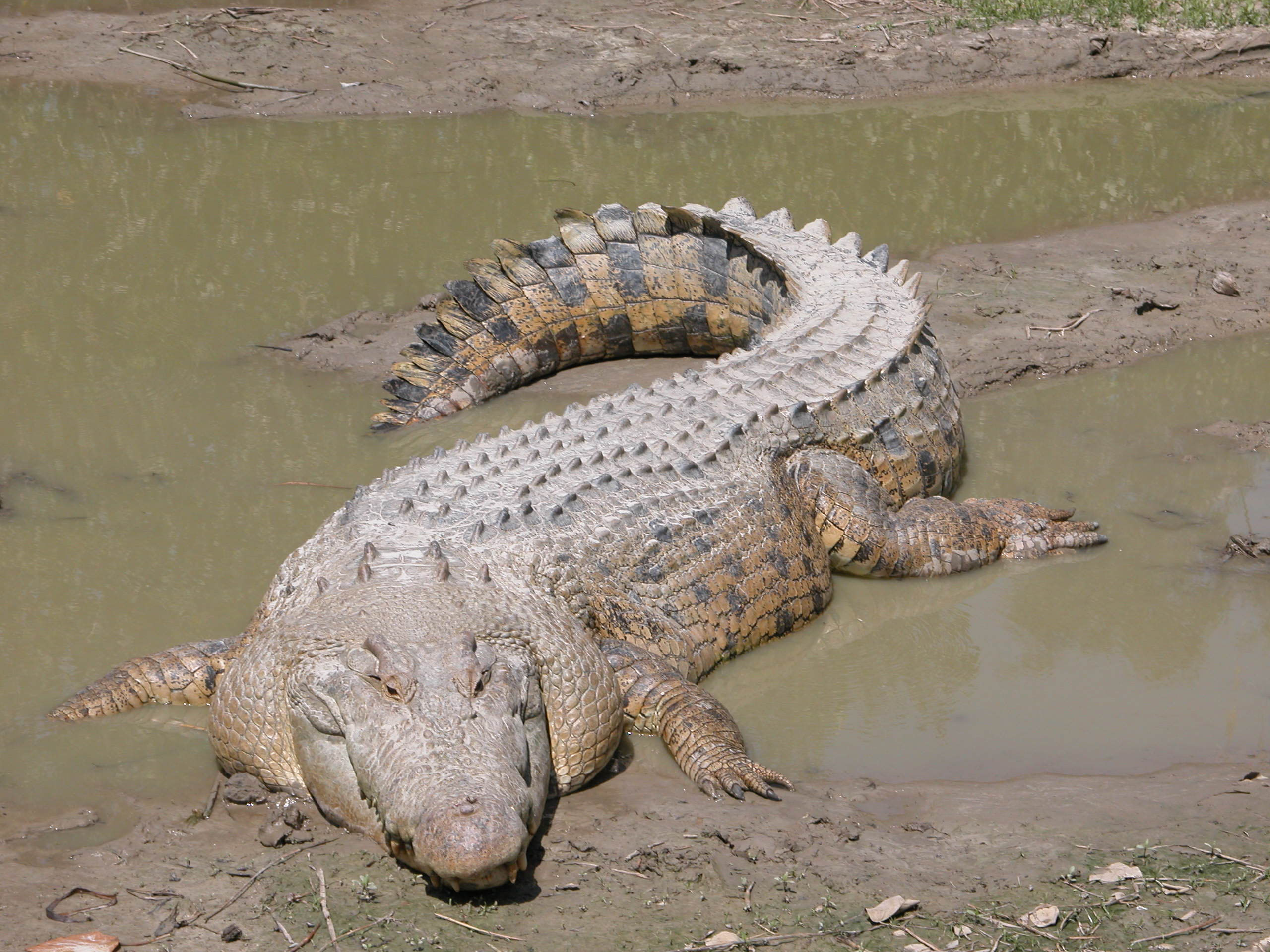
Image result for saltwater crocodiles

HUNTING: every apex predator needs meat to survive. Crocodiles have developed one of the most efficient and deadly strategies. First, crocs wait for their prey (medium sized hoofed mammals) to come to the river they are lurking in for a drink. They slowly float towards their target, acting as a log. The fact that their eyes and nostrils are on top of their head helps. Then, when the croc is close enough, it will go sink underwater and start gliding in. Finally, it leaps up at amazing speeds and grasps an antelope. It then drags it into the water, shredding it to pieces. Crocs often need helpers to aid them when doing the ‘death roll’. They spin in the water, tearing chunks of flesh off once in a while. The smaller ones, to small to actually hunt, can find food this way. A crocodile’s tongue is even stuck to the bottom of its mouth so that it is easier to swallow.

Image result for crocodile hunting

Crocodiles are some of the most adapted animals in the world. Do you think that they can still evolve? Or do you think that they are already perfect? Think about it.

Fun fact: Once, a saltwater crocodile got homesick after being moved from its birthplace. It swam 362 kilometers to return home. Whew!

Fun fact 2: Crocodiles can spend more than 2 hours underwater at a time.

Thanks for reading! -written by EZ

The French Revolution

Would you like to be rich? Would you like to be a king? You wouldn’t if you lived during the French Revolution. In 1789, the peasants revolted against King Louis XVI. It was a bad time to be rich, as the poor were MAD at you. And I don’t mean shouting mad, I mean hanging mad.

In 1789, the French government was broke. They had spent too much money on helping the Americans, on parties, etc. Anyways, they were broke. The only solution to this, was to raise taxes, and force the peasants to pay them. You might think, well, everyone has to pay more now, so it’s not that bad. There are two things wrong with that. Number one, the peasants could barely afford food. In the winter, they get so hungry they eat acorns, grass, and tree bark. Number 2, only the peasants had to pay. The rich people didn’t need to. That is completely unfair. Well, the peasants thought so too. But they were willing to contain their rage, and put up with the misery for a few more months. They hoped that the National Assembly would help France. But instead of solving the problems, the King sacked a popular minister. This was the final straw. Now, not only were the citizens against the king, part of the army was as well. On July 14th, they broke open a jail, marking the start of the French Revolution.

King Louis finally realizes that the people hate him. A few days after the prison breakout, King Louis dresses up as an ordinary citizen, and announced himself as a King of a Free people. It seemed like the revolution was going to be a short one. However, soon after, there was a rumour that rich people were gathering armed people to destroy the harvest. Peasants, who worked hard for the harvest, protested again. The attack castles, and burn down rich people’s houses. On October 5th, 1789, a mob of 6,000 women, demanding for bread, captures the King. The King is broken out once, by Grace Elliot, a scottswoman, but he is captured again. After this, France declares war on Austria and Prussia (a country back then), because they keep trying to help King Louis escape. In August 1792, the Prussian army storms Paris. Afterwards, the French Republic was created.

Written by Dz

Biggest to smallest

Image result for blue whale

Animals come in all shapes and sizes. From the giant blue whale to the tiny mosquitoe, all of these are amazing creatures. Today, I’m going to compare the biggest of the biggest to the smallest of the smallest.

The largest mammal: the blue whale. This 33 meter colossus weighs 140 tons – heavier than 7 school buses put together. In order to maintain energy, the whale has to consume 40,000,000 krill a day. That’s more than 3,500 kilograms a day. They even have a just in case food storage, which is their 61 centimeter thick fat. This fat also protects 8,500 litres of blood. Giant or Huge?

The smallest mammal: the Etruscan shrew. This tiny rat is only 3-5 cm long, weighing just 2-5 grams. This shrew could fit in a teaspoon and rest on your finger.

Image result for Etruscan shrew size

The largest fish: the whale shark. Like most giant fish, this big dude feeds on some of the smallest fish in the sea. With filter-like gills, whale sharks’ feeding method is just like their slightly larger mammal cousins. They gulp down big mouthfuls of fish and water, then filter the water out through its gills.

One of the smallest fish: the marshall islands/whip coral goby. These speck of a fish measure only 1.27 centimeters long. That shorter than the width of your fingernail! In order to keep themselves safe from predators, these little guys stay around stinging coral. They clean the coral in return for sheltering the tiny fish.

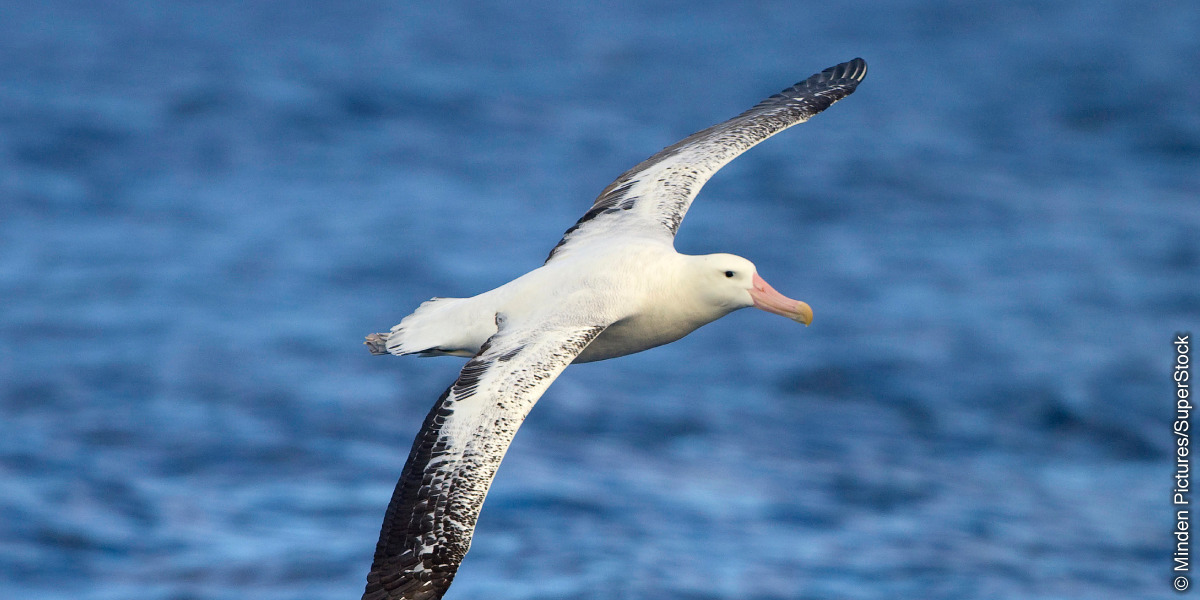
The largest bird: Ostriches. They are heavier, taller, and faster than an adult human. However, because they have such muscular legs and large build, their wings can’t support their bodyweight. So, this bird cannot fly. The largest flying bird is the royal southern albatross. This traveling wonder has a wingspan of 2.9 – 3.9 meters – almost as long as a small car. It measures up to 1.2 meters in length. HONORABLE MENTION: the Andean Condor’s wingspan rivals the albatross’s, at 2.7 – 3.1 meters wide.

Related image

The smallest bird: the bee hummingbird. Hummingbirds are the smallest type of bird, living off pollen, tree sap, and tiny insects. The bee hummingbird is only 5 cm long and weighs 2 grams – the smallest of the smallest. It is 36.3 million times lighter than the blue whale.

Image result for bee hummingbird

The largest reptile: the saltwater crocodile. This croc rivals the great white shark. They are about the same size (4-6 meters, 500-1,000 kg), and salty’s do actually go into the ocean, hence their name. However, most of the time, the saltwater crocodiles stay in fresh water. HORNORABLE MENTIONS: #1: Anaconda and Reticulated python. These are the largest snakes, which are even longer than the salty croc, at 10 meters. The Anaconda, in my opinion, is larger, because it is thicker around the waist. #2: the komodo dragon. Even though this lizard is nowhere near as long as the Anaconda or the Reticulated python or as bulky as the Saltwater crocodile, it still is the king of the lizards.

Image result for anaconda

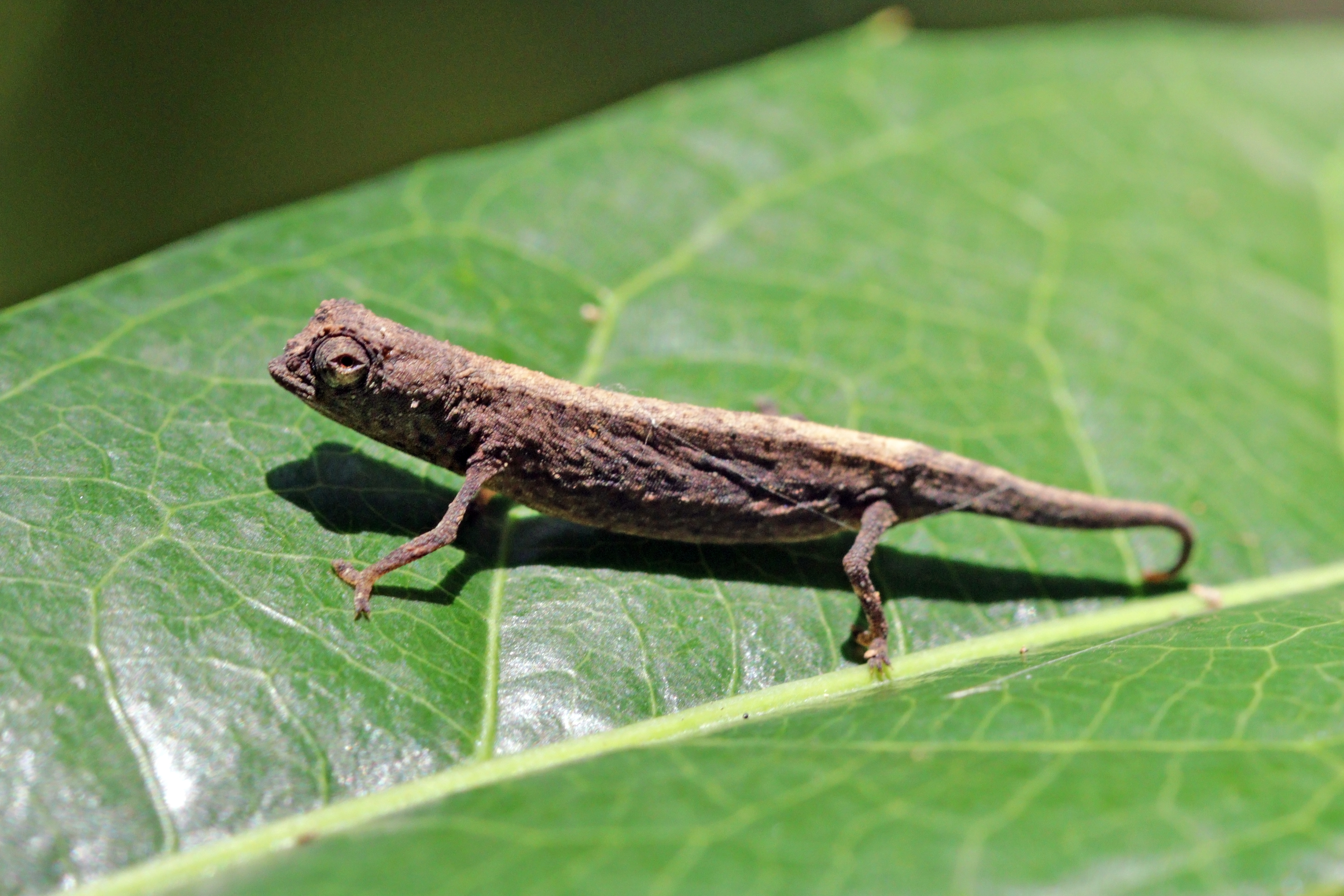
The smallest reptile: the leaf chameleon. This cute little lizard measures only 30 mm at largest, and juviniles can crall around on a dime. They can’t change colors, unlike their larger cousins. But they don’t really need to. After all, why eat something barely as large as one peanut if you’re a carnivore?

Image result for leaf chameleon

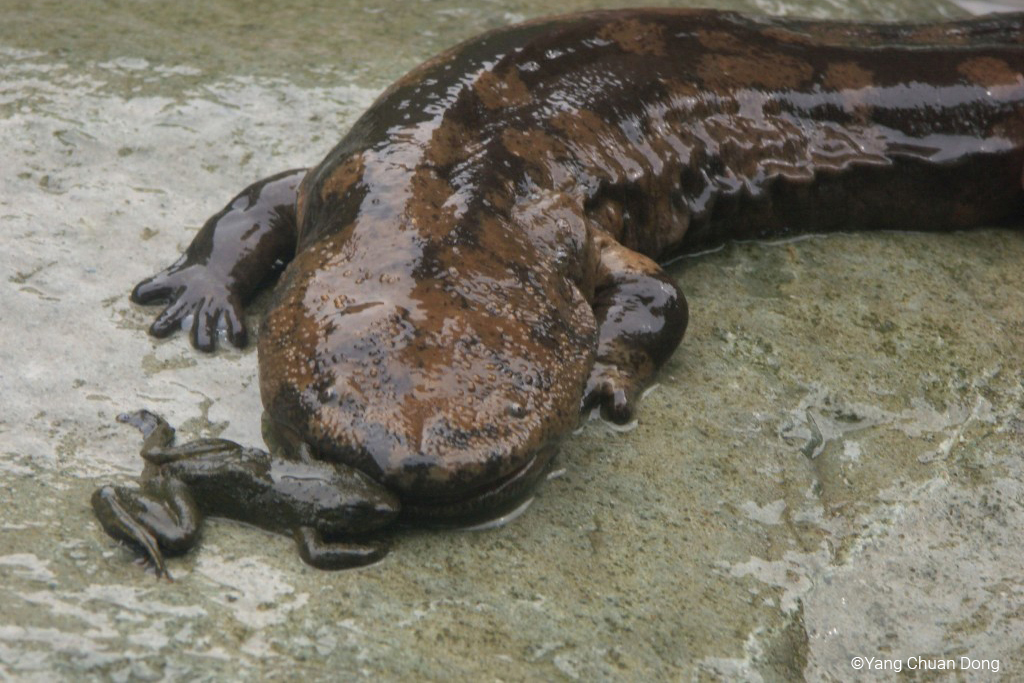
The largest amphibian: the Chinese giant salamander. They measure up to 1.8 eight meters, though it is rare to grow to that size. They eat fish, insects, frogs, and crusteceans. Their eyesight is not sharp (Chinese Giant Salamanders are nocturnal hunters), and they mostly depend on sensors in their head. They weigh up to 30 kilograms. HONORABLE MENTION: the goliath bulfrog. This wet, round, lump of a creature measures about 32 cm long and weighs 3.25 kilograms.

Image result for chinese giant salamander prey

The smallest amphibian: the Paedophryne amauensis may be the smallest vertabrae in the world, at 0.7 centimeters long. You can easily mistake them for insects or chunks of dirt because of their color and size.

Related image

Thanks for reading! -Written by EZ

The Gettysburg address

Hi, Dz is back. Lately, I’ve given up my sports report, because I didn’t find it extremely good. So today, I’ve come back with my deepest report yet, one on the Gettysburg address.

July 1st, 1863

Most people think of this as the day that the United States was united. However, in 1863, it was the start of a battle that marked a turning point in the Civil War. This turning point is what we now know as the battle of Gettysburg. Robert E. Lee was leading the Confederate army on what they knew as the Gettysburg campaign. The battle went on until July 3rd, in which the Union defeated the Confederates. The 2 armies suffered between 46,000 to 51,000 casualties. In honer of those who lost their lives battling, the Union dedicated a ceremony on the ground that is now the Soldiers National Cemetery.

That ceremony resulted in one of the most famous speeches of all time. It is called the Gettysburg address. Now, the original speech known as the Gettysburg address was one that was 2 hours long, and given by Edward Everett. However, the one that is known as the Gettysburg address, is a 2 minute speech given by Abraham Lincoln. The speech goes like this.

Four score and seven years ago our fathers brought forth on this continent, a new nation, conceived in Liberty, and dedicated to the proposition that all men are created equal.

Now we are engaged in a great civil war, testing whether that nation, or any nation so conceived and so dedicated, can long endure. We are met on a great battle-field of that war. We have come to dedicate a portion of that field, as a final resting place for those who here gave their lives that that nation might live. It is altogether fitting and proper that we should do this.

But, in a larger sense, we can not dedicate—we can not consecrate—we can not hallow—this ground. The brave men, living and dead, who struggled here, have consecrated it, far above our poor power to add or detract. The world will little note, nor long remember what we say here, but it can never forget what they did here. It is for us the living, rather, to be dedicated here to the unfinished work which they who fought here have thus far so nobly advanced. It is rather for us to be here dedicated to the great task remaining before us—that from these honored dead we take increased devotion to that cause for which they gave the last full measure of devotion—that we here highly resolve that these dead shall not have died in vain—that this nation, under God, shall have a new birth of freedom—and that government of the people, by the people, for the people, shall not perish from the earth.

Abraham Lincoln

What makes up an ecosystem?

Image result for ecosystem

Everybody knows what ecosystems are. They are a system where living things eat and get eaten. But, what are the levels of power in an ecosystem? Read on to find out!

Consumers and producers. These two things are what make up an ecosystem. Producers get eaten and consumers consume. But, there are many different levels. Food chains are also based on these levels. Today, I’m going to use a rainforest ecosystem as and example.

At the bottom: primary producers. These are trees, bushes, grasses, any type of plant. Normally, these collect energy from water and sunlight to grow. These are at the bottom of the food chain. In our rainforest, these would be the trees, bushes, and flowers that make our forest a forest.

Next up are the primary consumers. Squirrels, rabbits, antelope, cattle, even elephants are in this section. Herbivores of all sizes make up this part of an ecosystem. There are more herbivores than carnivores because plants are more common than meat (herbivores). Monkeys, parrots, frogs and sloths are examples of primary consumers in a rainforest.

Next are the secondary consumers. These are omnivores or predators that can still be hunted. These animals thrive, because they can eat basically anything – a passing insect to a plain leaf. A secondary consumer in a rainforest is the fruit bat and chimpanzees. The fruit bat is a complete herbivore, but the chimp is an omnivore.

Finally, there are the apex predators. These animals are at the top of the food chain. They can’t be hunted – they only hunt other organisms. However, while most of these are complete carnivores, not all of them are. Take the grizzly bear for example. In fact, it’s an apex predator that is mainly herbivorous!

Next comes the decomposers. I’m always wondering wether these things should be at the bottom or at the top. The reason they should be at the top is that they actually consume everything else. Whenever something dies, these things break it down and turns it into nutrients. But, they don’t actually hunt things – sometimes, decomposers such as mushrooms and moss even get consumed by primary consumers. So these funky fungi have always been a mystery on the food chain to me.

Thanks for reading! -written by EZ

Peregrine falcons: the fastest one

Image result for peregrine falcon size

Peregrine falcons. What a weird name. Pare-i-grine Falcons. However, despite the weird name, this bird has superb eyesight, lightning fast dive speed, and a lethal ‘killer claw’. If you want to find out of this gift from nature, read on!

Peregrine falcons are birds of prey. They hunt other smaller birds or mammals. In order to catch its prey, the falcon is equipped with many special body features and has a special technique to find food.

GENERAL STATS: a peregrine falcon is about half a meter long; not a large bird. Like most other birds of prey, females are larger and heavier than males. Females weigh up to 1.5 kilograms, while males can weigh as little as 330 grams. They both have their advantages based on size. The male can weave through obstacles easily while chasing prey because they are so small. On the other hand, the larger females can hunt larger prey with their extra muscle. Peregrines live about 13 years – if they survive their first birthday. 60% peregrine falcon chicks die in their first year.

HUNTING METHOD: alright. Today, I’m going to focus on how the peregrines hunt. They have one of the most unique hunting strategies, based mostly on speed.

Step one: spot. Peregrine falcon first scans a large flock of pigeons. (However, peregrines are known to kill birds even larger than itself, such as geese.) It singles out one weakling, and starts to dive. It tucks its wings in and begins to dive headfirst.

Step two: dive. After selecting a weak bird, the Peregrine falcon starts to fall headfirst with wings tucked in. The flock of pigeons will most likely see the Peregrine and scatter. The peregrine extends its wings a bit, but keeps them in a V-shape so that the falcon can still pierce through the air very quickly. During this time, the Peregrine can reach speeds of up to 300 kilometers per hour. The startled pigeons will have no chance of escape.

Step three: parachute. Finally, after getting within ten meters of the pigeon, the falcon untucks its wings and reaches out its talons. It slows down, but not completely. It still has a lot of force. The killer claw (the back/fourth toe) is especially dangerous. It’s going to stab into the pigeons flesh while the others grip the prey.

Step four: Kill. This is the last stage of the hunting cycle. The falcon jams its killer claw into the guts of the pigeon. It then holds onto the dead bird and glides forwards. The Peregrine uses its strong chest muscles and warm blasts of air (drafts) to rise up into the air. They know how to use the wind to its advantage.

Related image

Step five: eat. This doesn’t exactly count as a hunting stage, but is is bloody. The Peregrine falcon shreds the meat into strips and feeds it to its chicks with its hooked beak. RIIIIIIIIIIP!

Thanks for reading! -Written by EZ

Wet, slippery, Otters!

Otters are lively, cute, and amazing animals. They are one of the most agile creatures on the planet, on land and in water. There are 13 species of these animals, and today I’m going to tell you about all those otters.

BODY FEATURES AND FAMILY MEMBERS: The largest otter in the family is the giant otter, at 1.8 meters and up to 45 kilograms. Its opposite, the asian short clawed otter is only half its size. But all of these otters have the same body features. They each have a long tail, acting as a propeller. However, in order to keep warm, an otter’s fur sheds water so that their skin doesn’t get soaked after a swim. Like all members of the weasel family, otters’ legs are short, and their body is long and slender. They have webbed feet, actually, to aid their tail when swimming. Also, otters’ eyes can work perfectly on land and water, and their noses and ears close automatically after diving.

TERRITORY: Territory is very important to otters. If an otter doesn’t find a good territory of its own, it could die. Males normally occupy 40 kilometers of river bank territory, while females take 20 km. However, beachside otters only need about 5 kilometers to survive. This is because prey, such as clams and fish, are so common there.

FOOD WEB/CHAIN: grass/insects/fruits/nuts (get eaten by)> fish/vole/frog/bird hatchlings > otters.

SWIMMING AND RUNNING: as I said, otters are one of the most agile creatures both on land and water. Now I’m going to tell you about it. To stay warm, otters’ fur trap air inside. In the water, the air is first forced out of the fur, keeping the otter warm for a short while. During this, otters shake their hindquarters and tail to propel themself forwards. However, otters tuck their front legs close to their body to make it more streamlined. Otters can make sharp turns, simply by making a horizontal stroke with its tail. This way, they can catch up to their prey before the air in their fur is completely gone. On land, otters can still jump and scamper up and down like a squirrel, able to outrun and average adult human.

POOP: otter poop is one of the most ‘unique’ in the animal kingdom. They are 3-10 cm long, and turn white when stale. Otter poop used to mark territory is called a ‘spraint’.

CUBS: Females give birth to cubs 62 days after mating. An average litter is 2-3 cubs large. Each cub is 15 centimeters long and 40 grams heavy. That’s very small, considering otter poop is already up to 10 centimeters long. They have very fluffy fur, and barely ever come in contact with water. At 5 weeks, their eyes start opening and the cubs start to crawl. Finally, and 7 weeks, baby otters start eating their first solid food. When it’s time to enter the water, mother otters often have to force their cubs in because they are so reluctant. Finally, after 1 year, the cubs mature and leave to find their own territory.

Thanks for reading! -Written by EZ

Celtics – warriors of Europe

Who are the Celtics? The NBA team for Boston? Wrong! The European warriors of the Bronze age? Correct. The Celtics were very powerful during the Bronze-Iron age. They conquered nearly all of Europe, their kingdom reaching from Ireland to central Turkey. Wanna find out more? Read on!

Beginning of the Celtics: Celts first appeared in 750 BC, in Britain. They settled down, and changed everything to their Celtic ways. Even today, people still refer to Britain/Scotland art as Celtic culture. After taking over the UK, the Celtic warriors started to take over more of Europe, until their kingdom stretched across all of central Europe, and even a bit of Africa at their peak. During the Celtic rule, people started using iron instead of bronze. However, iron was much harder to melt and shape than bronze, so some chosen people became blacksmiths. Their job was to melt iron and make weapons and tools. So, the iron age began.

Celtic rankings: of course, celts had a hierarchy. At the top with most power was the chieftain or king of the local tribe. These people were the highest class, like people with private planes. Soldiers and warriors were next in line. They were like people with first class seats, because war was so common amongst Celts. (Tribes raided each other a lot.) Then, the majority of the Celtics were metalworkers or farmers. They lived a decent, safe, and free life. These people are like the economy class people. Under them are the labourers. They aren’t quite slaves – they still have freedom, but they are more like assistant farmers that didn’t earn enough money. In our ‘plane’, they might have economy seats, or two might be sharing one first class seat. The lowest ranked people were the slaves. Just like everywhere else, slaves were treated horribly, with almost zero freedom. Slaves were most often won during war, or their parents were slaves, so they were born into slavery. They would be like people who couldn’t afford plane tickets.

Celtic buildings and armour: The most common type of Celtic building was the ‘hut’. They had a mud built cone shaped roof and wooden walls. Sometimes, the roof was covered with straw. Hearths were also very important, for keeping warm and cooking food. The most unique type of fort was the hill fort. The fort was built on top of a hill, making it hard to attack. They also dug deep trenches and built walls, so that there were more than one level of protection. It would take an expert to get past all these traps.

Armour was important to celts, because there was so much warfare. Upper class warriors often had bronze helmets, chain mail suit, and a spear and wood/bronze shield. However, most warriors had no helmet, no armour, and short sword, and leather trousers.

Fun fact: Celtics often put a dead person’s remains in a jar that was put in his burial mound.

THANKS FOR READING! -written by EZ

Your body – blood, bones, and muscles

The human body is one of the most complex and well developed organisms in the entire world. But how does your body work? There are many different parts. Today, I’ll talk about some of the most important body features are.

#1: BONES. Bones. What do they do? They hold you up and prevent you from being jiggly and wobbly like jello. All the bones, as you know, are combined into a frame called the skeleton. Joints are some of the most important things that hold you skeleton together. One type of joint is the hinge flap. It’s like a door hinge, where there’s one round center and flaps connected to it to help it move around. One example is your nose (Although it doesn’t move around much). Your nose has one center bone that runs all the way down your nose and acts as a spine. Then, there are two sides, one on the left, one on the right, making it like a triangle. The ‘spine’ is the center of the hinge, and the bones on the sides are the flaps. In this case, the flaps don’t move. Another type of joint is the ball and socket joint. This type of joint is when a bone with a ball on the edge is stuck into a socket. One example of this joint is where your leg connects to your hip. A gliding joint is where there is like a cake with many layers, and these layers move. The ones on the top spin in one direction, and the layer in the middle moves forwards and backwards. Some of these include the part of your hands and feet that connect the toes and fingers on.

Related image

#2: MUSCLES. You all know what muscles are. The big, bumpy things that make you strong. That’s sort of correct. Muscles don’t just make you strong – they help you move. Without muscles, you would just be a frame with lots of fat that wouldn’t be able to do anything. Muscles are connected to bones by a strong, stringy material called tendons. Tendons can carry 58 tons of weight before snapping, so don’t worry about losing your muscle connection to your bones. Muscles are made of of stringy fibers that are made up of Fibril (a skinny type of meat string).

Image result for muscles
muscles are all around your body

#3: BLOOD. Blood is vital to your body. It carries oxygen around the body, getting pumped up to one and a half times per second around the body. Cells help do the oxygen carrying. But in order for them to know where to go, they need to have a specific section to walk in. It’s like traffic on the streets. Red blood cells act like cars, flowing up and down right in the middle of the arteries and veins. White blood cells and other things have to walk like pedestrians on the side, to prevent ‘car accidents’. The reason Red blood cells have the center lane is that they have the important job: carrying the oxygen around. White blood cells have more the ‘just in case jobs’, acting like the police. If there are any bacteria or virus infections, they run there and gobble up the germs.

Image result for blood

Fun fact: the darker your urine gets, the less hydrated you are.

Thanks for reading! -written by EZ
Amazing creatures: Salamanders and Newts, how to tell the difference

Image result for salamander

Salamanders and newts are common amphibians. They are very much alike, but also different. They look similar, but their habitat and habits are different. If you want to tell them apart, read on!

SIZE: Salamanders, most of the time, are larger than newts. The largest salamander, the Chinese Giant Salamander, weighs 25 – 30 kilograms, and occasionally growing up to 1.8 meters long! That’s about 6 times the length of the largest Newt – the Sharp Ribbed Newt.

HABITATS: Salamanders are usually wholly aquatic or wholly terrestrial. This means that they either spend the vast majority of their life in the water or they normally stay on land. On the other hand, newts are normally born in the water. After becoming an adult, the newt leaves the water and stays on land for most of its life. However, newts normally return to the water to breed and lay eggs. So, you could call this largely terrestrial.

LIFE CYCLE:

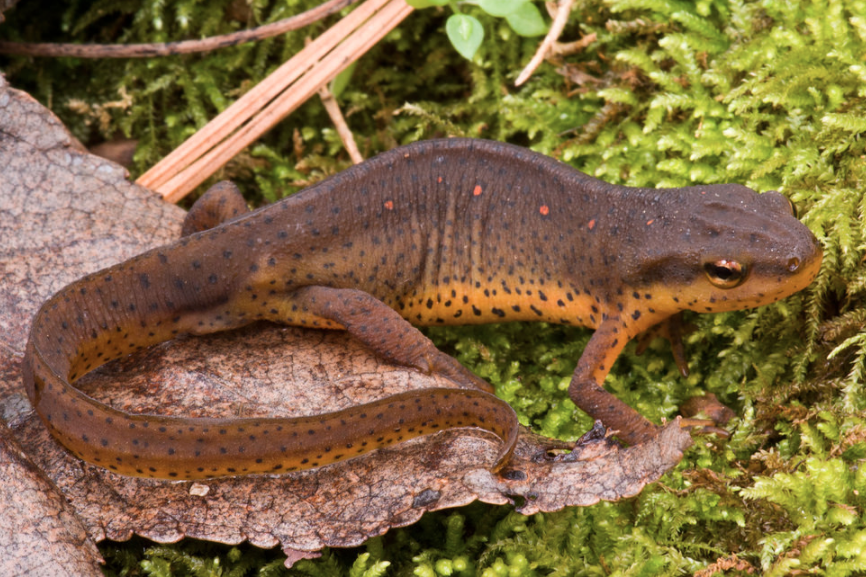
NEWTS: Newts hatch in the water. When they come out of their eggs, they already have gills and a long tail. In this stage, they are called tadpoles, just like baby frogs. Then, they start to grow legs. They are now called larvae. Some Newts and salamanders, however, mature in their larva stage. If so, then they are probably wholly aquatic, because they never lose their gills. The stage after the larva is the eft. They start to leave the water and lose their gills. Finally, they are adults. And they probably will only go back to the water to breed.

Image result for newt
Red spotted newt. Newts often have skinny, flat tails.

SALAMANDERS:

(LAND): Terrestrial salamanders lay less eggs than those in water. However, these eggs are larger and more nutritious. The baby salamanders stay inside their eggs during their larva stage. When they hatch, they are already juveniles (efts in the newt life cycle).

Image result for salamander larvae
Here’s a salamander larva!

(WATER): In the water, salamanders lay much more eggs than the ones on land. They hatch as larva, breathing through gills and already with small legs. Then, they grow straight into adults. Because they are wholly aquatic, (they never leave the water) they don’t need to lose their gills. In this case, they gills may develop small frills around the gills.

Personally, I prefer salamanders, especially the fire salamander. They just look so cool.

Image result for fire salamander
Fire salamanders. Don’t they just look so cool?

Thanks for reading! -Written by EZ