

Volcanoes come in many different shapes and sizes. But you might want to learn about these if you are living near one. The difference could be very large!
First of all, lets get some things straight. If a volcano is NVV, that means that is is Not Very Violent. However, if it is IV, then it’s Incredibly Violent. Well, that’s how scientists call them.
Now, just let me tell you about a volcano’s internal body structure. First, magma bubbles underneath the mountain, slowly building a tunnel upwards. Then, magma flows into a chamber, filling it up. These are called magma chambers. (obviously). The magma chamber is a place to store the magma. Then, it crawls up, creating a funnel all the way at the top of the mountain. That’s the crater. But, on its way up, the magma does create a few side tunnels as well. These are called ‘vents’. When the volcano erupts, gooey magma will be flowing right out of these holes.
Here are the different types of volcano:
A: Shield volcanoes. These are shaped like shields – gentle sloped, and large in area. These volcanoes are NVV, so they are pretty safe. Lava (magma with air) slowly slides down a shield volcano’s gentle sides, so it takes quite a long time to reach anything nearby. However, they also have lots of side vents. So lava can very much come out of the side of the mountain in many directions at once!

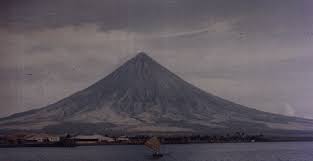
B: Composite volcanoes. These are the tall ones: Mt. Etna (3,350 meters), Mt. St. Helens (2,550 meters), Mt. Cotopaxi (5,897 meters), etc. These, even when active, might have glaciers on top because of their amazing height. They are IV, though actually quite amazing when they are extinct. Mt. Fuji is one of the most well known. Composite volcanoes are formed by many, many previous eruptions. The ash and hardened lava forms layers and layers of rock, covering the original mountain. They become taller and taller until they become extinct.
C: Cinder cones. These are small, miniature volcanoes (10-100 meters tall) that often grow on the side of shield volcanoes. Cinder cones can form in clusters of more than 100. Despite their small size, Cinder cones are still IV, especially because there can be so many of them. These don’t have many side vents, being so small.

Thanks for reading! Random fact: Hippos’ skin can be 15 centimeters thick, and 500 kilograms heavy. (in total) -Written by EZ
 DEC-XZ