the opium wars; part two | the history of Hong Kong

Last we left off, the Chinese government was about to decide how to end this opium smuggling. A strict, loyal general was sent to stop the trade. His name was Lin Zexu. First off, he traveled to canton, which was where all this opium was coming from. He arrested opium traders, threw away the drugs and pipes, and addicts were forced into rehabilitation camps. After this, he confronted the British salesmen in Calcutta and deliberately asked for their opium.

The British were a bit afraid of the Chinese, but they also didn’t want to lose their tea. So instead of handing over their entire supply, they gave little bits at a time. Lin Zexu, after writing a letter with no reply, was getting frustrated. Finally, they British handed over their 20,000 opium chests after six weeks of Lin Zexu’s siege. The fight escalated when a Chinese man was killed by two British sailors. Lin Zexu’s first demand was that the two murderers would be sentenced to death. However, the British disagreed. Lin Zexu was even more angered. So, he cut off all food and water supply for the British in China, eventually causing them to flee to the island of Hong Kong.

The British men who were in Hong Kong had finally run out of supplies. A ship was sent to buy food and water in Canton. However, the Chinese officers in charge of the area would not allow this. A fleet of Chinese junks was sent and destroyed the supply ship.

Now, the full war had begun. British ships were blocking the entrance to China, stopping all Brits who wanted to go there. However, a ship by the name of the royal saxon tried to get through. This was not allowed by English law – although the Chinese had allowed Brits to set foot on China to trade and not sell opium, the English refused. So, the blockading english ships fired at the royal saxon. This gunfire was not unnoticed by the Chinese. Another fleet of Chinese warships were sent to protect the royal Saxon. However, for the Chinese, this battle ended in failure. The surviving ships were damaged severely, and two of their ships had been wrecked during the battle.

Full scale war had begun.

TBC…

Written by EZ

The opium wars; part one | History of hong kong

Recently in school, I learned about the colonialism and history of hong kong. The part I found interesting was the opium wars*. This blog is all about how the opium wars happened.

(*there are two opium wars – I’m only talking about the second)

In the early fifteenth century, Europeans had gained lots of power. However, they wanted to conquer more. So, after Columbus discovered the Americas, more and more explorers set out to find land to take over. If a country found useful land, they would colonize it – kick out or kill the old inhabitants, take over the land and its supplies. This was happening all around the world.

However, there was one country and large empire that didn’t participate – China. During that time, Chinese were distant from the Europeans. After all, the Chinese thought their lives were perfect and needed no intervening of others. Trade was rare, and if so, only if a few restricted ports. After more and more salesmen arrived, the Chinese decided only to allow one port – Canton. Also, if you were to trade, the Chinese would tax you however they thought reasonable.

This was a problem for many European countries, especially Britain. The Brits had fell in love with tea, and the only place to get it was from China. But there was another problem. The Chinese would only accept silver in turn for tea, so soon, the British were running a huge trade deficit with the Chinese. To make things worse, the British had just lost most of their silver mines in south America, and had come out of many expensive wars. Even when all this was happening, the British were running the ‘Honorable East India Company’, which controlled wars in India and was eating up money, falling millions of pounds in debt.

So, the British decided to find something else they could trade for tea, something that the Chinese wanted. Since 5% of an average citizen’s income was now spent on tea, the British needed to get as much of it as possible. And they finally found the right good – the drug opium.

The British had discovered that India was horrible for growing cotton, but was brilliant for poppies. So, they grew lots and lots of it. The Brits then converted it into opium, and set up sales in Calcutta, India. Lots of Chinese were instantly addicted. Smugglers were now all around China, bringing in opium for silver, which the British then traded for tea. But the Chinese government noticed. Opium was illegal in China, and so the government soon decided to put an end to this.

TBC…

Thanks for reading! -Written by EZ

Toilets

Although we don’t think about it, one of the most important things that we use today, is the bathroom. And one of the most vital parts of the bathroom, the part that makes a bathroom a bathroom, is the toilet. Today, I’m gonna be talking to you about the toilet.

Before the toilet was invented, most civilisations simply used something called a chamber pot to go to the toilet. In some less developed places before, they would simply go to the toilet in a hole, known as a cess pit. If you’ve visited some old landmarks, it’s likely you’ve seen one. I remember seeing some in the Colosseum. However, eventually, people decided that chamber pots and cess pits, are not hygienic. That’s probably why. in 1596, the godson of Queen Elizabeth the I, made the first flush toilet. However, the idea didn’t catch on for a very long time, and people just kept on using the cess pits and chamber pots. The first major toilet company that emerged, was one founded by Thomas Crapper, named Thomas Crapper & Co. While the actual toilet was invented in 1596, the worldwide use of flush toilets should be credited to Thomas Crapper.

So how does a flush toilet work? A flush toilet uses water as an oder seal, and as a path down to the sewers. When the flush is pulled, water brings the waste down the drain, and into the sewers. There are some special aspects to some sorts of flush toilets now, such as bottom washers, etc.

While we’re at it, I think we might describe why the flush toilet was so necessary to the human world right now, by describing how people used to go to the toilet. First, there is the chamber pot. Arguably the better one of the two old fashions, the Chamber Pot is basically a modern day potty, except made by clay. The Cess Pit, is still used as well today, but in less developed places. It is basically a hole, where you do your business in.

Fun fact, in case you haven’t noticed, Thomas Crapper’s name sounds like ‘crap’. He must’ve been made fun of, right? Well, not in the way you think. His last name was the origin of the word that means poop in the modern day: crap.

Written by:
Dz

Butterflies and moths – how you tell the difference

Monarch butterfly

Butterflies and moths are probably the most alike insects in the world, before millipedes vs centipedes and bees vs wasps. But there are differences, although subtle. Read on to find out about butterflies and moths – how you tell the difference.

Difference one: the antennae. Moth antennae are fuzzy and really quite long. But the difference that’s always there is the knobs. Moths never have knobs on their long, fuzzy antennae, but butterflies always do. Also, butterflies have smooth, slender antennae.

Difference two: Diurnal vs nocturnal. I have blogged about what these phrases mean in ‘When are you awake?‘. Anyways, moths are normally nocturnal. Moths mostly feed on and pollinate flowers that only bloom during nighttime. They collect pollen and drink nectar the same way butterflies do. On the other hand, butterflies come out during day. One of the reasons of this is because butterflies find direction by looking at the sun, or a sun compass.

Difference three: How they rest. If you have ever seen a butterfly rest or stop flying on a flower, it’s either pollinating, resting, or both. While it does this, the butterfly’s wings are probably upright. However, moths don’t do this. Moths are often attracted to a street lamp or something bright / glowing at night. If you observe them carefully in the day, you will see that they are resting with flat wings, drooping slightly downwards.

Difference four: Their body shapes. If you look at a moth, you will probably think the thorax is the head. But, if you look closely, the tiny head of the moth will appear with the giant antennae connected. Also, moth thoraxes are fatter than the abdomen. In butterflies, however, heads and thoraxes are the same size. Eyes are also clearly visible.

Thanks for reading! -Written by EZ

Amazing creatures: Tiger sharks

Tiger sharks are probably one of the most aggressive shark species in the world. They are also formidable predators, snacking on almost anything smaller than itself. So, today, let’s take a sneak peek at these amazing animals.

BODY FEATURES: Tiger sharks are relatively large sharks. They have moderately short tail flukes, which are upright like all fish. They also have an upright dorsal sticking right up on the middle of the body. Tiger sharks breathe through 3-6 gills. They have a pointy mouth/snout, armed with serrated teeth used for shredding and cutting flesh. Tiger shark teeth have a large curve on one side and a dent on the other.

HABITAT: Tiger sharks’ habitat ranges from the Mexican gulf to the east coast of Brazil. They swim in the Caribbean sea, the Atlantic ocean, and the pacific ocean. Like most sharks, Tiger sharks favor warm waters where prey is abundant. These sharks often live near uninhabited archipelagos.

SIZE AND WEIGHT: A tiger shark is normally 3-5 meters long, weighing 380-630 kilograms. Males are slightly smaller than females, large ones measuring up to 4.4 meters. The largest tiger shark ever found (probably female) was 5.5 meters long. There are rumors of a tiger shark larger than 6.5 meters in the pacific ocean.

DEVELOPING INTO AN ADULT: Tiger sharks are born live. This is rare in its family (Requiem sharks). A pregnant female has two wombs full of unhatched shark eggs. Once one hatches, the earliest born baby will eat the other eggs or smaller, younger hatchlings. If one baby survives in each womb, the mother will have two ‘children’. Juvenile tiger sharks have very clear markings, normally stripes and spots. Once they grow older, these markings fade into their skin.

WEIRDEST HUNTING METHOD: Tiger sharks have some weird hunting methods. During leatherback turtle mating seasons, the sharks gather around the islands in which they will lay their eggs. The sharks will allow the turtles into the sea, knowing their opportunity is yet to come. Finally, over the course of a few days, the sharks will feast on turtle carcasses that have been washed into the sea. These carcasses come from corals, where the turtles were trapped and exposed to the air during low tide. Due to lack of water and heat, they died and the remains were washed into the sea. Some of the turtles were also injured already by the sharp limbs of the coral.

Thanks for reading! -Written by EZ

Slimy snails and Super slugs

Snails and Slugs are probably the slimiest animals or even things in the world. Instead of footprints, their giant foot leaves behind a slime trail! Some slugs can also lower themselves down on a string of slime. How much slime is that!?!? Without further adieu, let’s dive into the world of slimy snails and super slugs.

The African Giant snail is the largest snail in the world. The largest ever recorded was over a foot long! Their disgusting diet consists of bananas and carrion. However, that’s nothing compared to sea slugs. Once, a slug over 40 centimeters and weighing 7 kilograms was discovered! That’s as large as a newborn baby and twice as heavy as one!

Unluckily for small, tiny, insects with ‘slime-ophobia’, majority of slugs and snails are omnivores, but mostly carnivores. When they decide to eat, they eat a lot. If slugs didn’t eat potatoes, 400,000 people could live off potato chips for a year. A slug/snail’s tongue is so hard it’s primarily used for grinding. One slug (oyster drill) uses it to drill through oyster shells!

How do slugs and snails move around? Most of them use their single and large ‘foot’. They wave their muscles around, propelling (sort of rolling) themselves forward. As they move, slime helps them slip along rough and snagging rocks. A Glaucus sea slug probably has the most unique type of transportation. They keep an air bubble in their stomach, allowing them to float up to the sea surface. There, they literally ride the waves.

Thanks for reading! -Written by EZ

Insect body bits

Insects are tiny creatures so tiny that many people can’t notice their amazing body parts. So, in this blog, were going to dive in small and learn about those arms and legs.

The insect body is split into three sections – the head, the thorax, and the abdomen. In almost all insects, the abdomen is larger than the thorax and head. Also, lots of insects have larger heads than thoraxes – large eyes and large jaws take up a lot of space.

Speaking of the head, let’s look at its features first. An insect’s lips are very sophisticated, consisting of four parts. The labrum (upper lip), the labium (bottom lip), the maxillae (the back jaws) and the mandibles – the pincers. The mandibles are commonly the only thing you can see be looking at an insects head. Some fighting insects, such as stag beetles, have larger mandibles than heads! Also, the labium is actually shaped like a tooth, coming up from the bottom jaw. At first, I thought the maxillae was the bottom jaw!

Basically all insects have compound eyes. Compound eyes are eyes with multiple lenses so that the user can see many different angles. This allows many secondary consumers (predators that can be eaten) to be on the lookout for predators and prey at the same time. An example of a secondary consumer with compound eyes (insect) is a dragonfly.

But, normally, eyesight is just half of an insect’s important senses – feel is the other half. Antennae are vital to many insects who live in crowded, condensed places like the rainforests.

Next, let’s get onto the thorax. Nothing much to say – probably the least useful body segment. Apart from connecting the head to the abdomen and carry the legs, not much other use. No wonder why spiders don’t have this bit. Wings are also attached to the thorax.

Finally, the abdomen. Abdomens normally contain the stomach and most tiny but vital internal body features. Also, if you didn’t know, insects don’t have blood vessels – blood just runs where it wants to. Breathing holes are all over the body (called spiracles) that are connected to ‘breathing tubes’ that pumps the oxygen around the body.

Thanks for reading! -Written by EZ

Bees and how they make honey

Bees collect honey, we steal it from them, and we eat it. We do some flavoring and other stuff on our side, but how to actually make the honey is on the bee’s end. So, today, let’s take a look into how the bees collect pollen and nectar

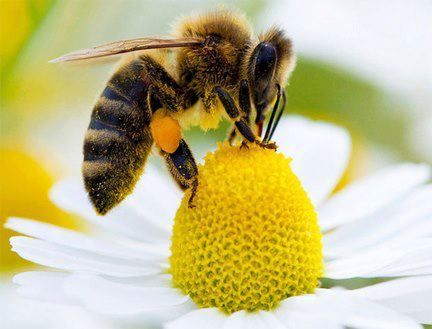
The first step is to find flowers. That’s not hard – they’re all over the place. Some bees can collect from over 10,000 flowers every day. As they sip up the nectar with their long tongues, their legs also collect large cases of pollen.

As the bee takes more stops, the pollen on their legs brush off and fertilizes with other flowers to make seeds. The bee also keeps collecting nectar, storing it in its special nectar stomach. The bee’s stomach has a special chemical that breaks down sugar in the nectar. If the bee gets hungry, it will eat and use up some of its collected nectar.

After the special stomach is filled up, the bee will fly back to the hive to make the nectar into honey. The bees dry it using a variety of ways, such as fanning it with their wings, sucking out the water, and drying it out on their tongues after sucking out water. After very little water remains, the bees will store the food in small, hexagon wax containers for later.

Honey is stored in wax contianers

Now, let’s get into the daily life of bees.

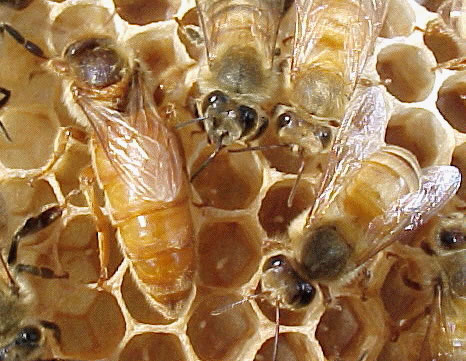
A Queen bee’s life is basically spent mating and laying eggs. However, if more than one junior queen be hatches out, the two competitors will fight until one of them dies or flies away to form a new hive. (This mostly happens between siblings – not mother and daughter.)

Queen bee (slight left)

A drone bee’s job is to mate with the Queen and just wait. They wait and wait until they have an opportunity to mate. Most drones (out of hundreds) don’t wait up till the day they get to mate, and just die.

Worker bees are by far the most busy. They work themselves to death in a few weeks. These are jobs they are responsible for:

  1. Nursing the grubs
  2. cleaning the hive
  3. guarding the hive
  4. making honey and nectar
  5. feeding the queen
  6. feeding the drones
  7. feeding the grubs
  8. making body wax (the wax oozes out of their bodies)
  9. building new honey cells (out of wax)

Thanks for reading! -Written by EZ

Amazing ants

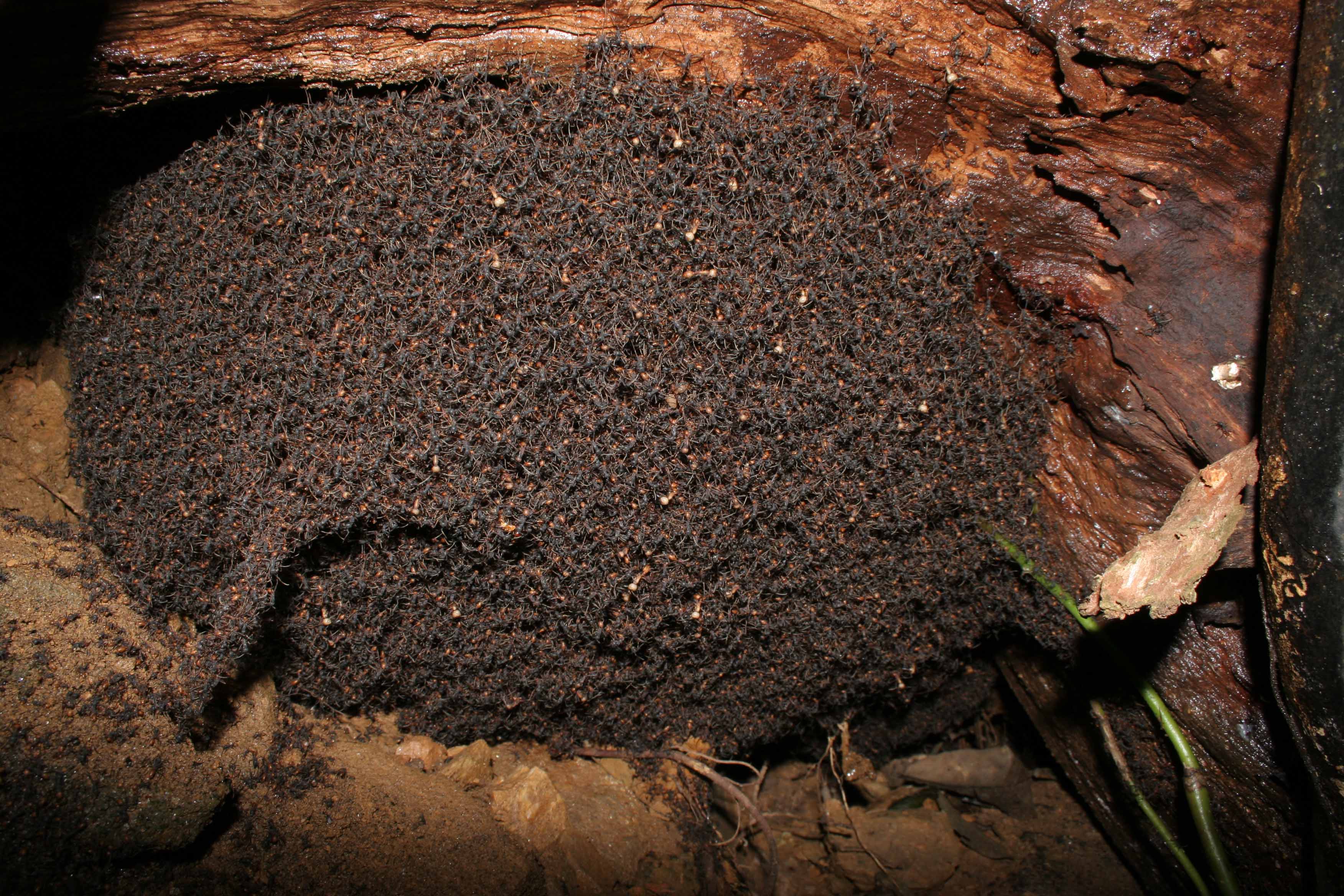
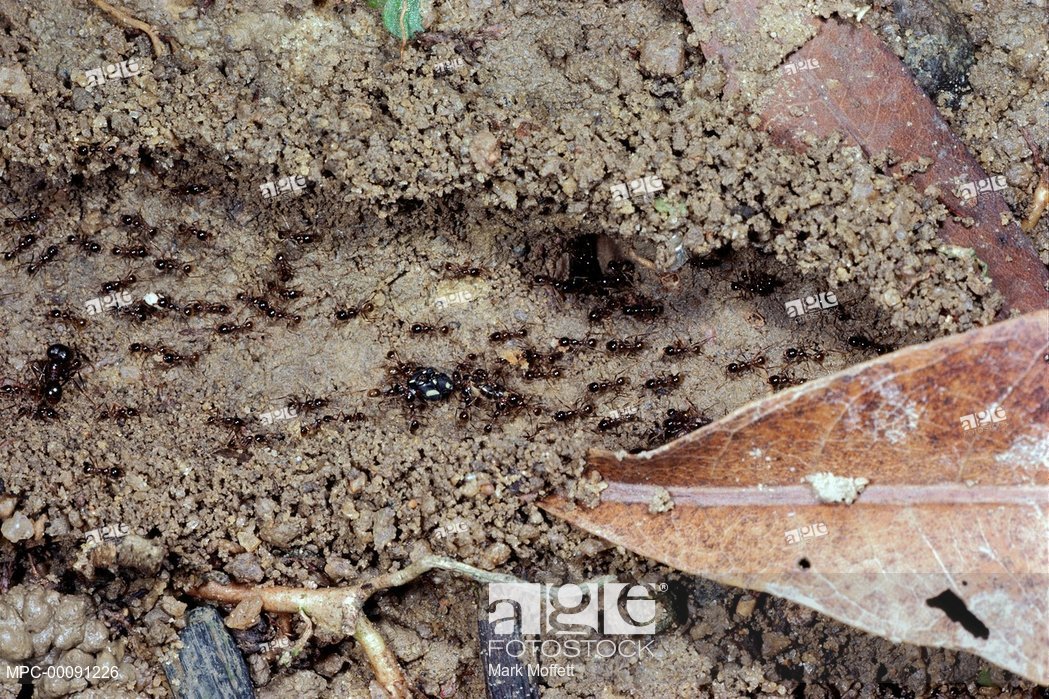
All of those small specks are part of this giant ant colony

Ants are common all around the world. They are probably the most well known insect or even bug in the world. However, most people squash these amazing creatures when seen. But ants also have complicated and sophisticated lives. Read on to find out how!

SOME RANDOM ANT FACTS:

Alright. First of all, in Germany, you can’t squash red ants – they’re literally protected by the law. This is because the ants eat up to 100,000 caterpillars and other pesky little bugs per day.

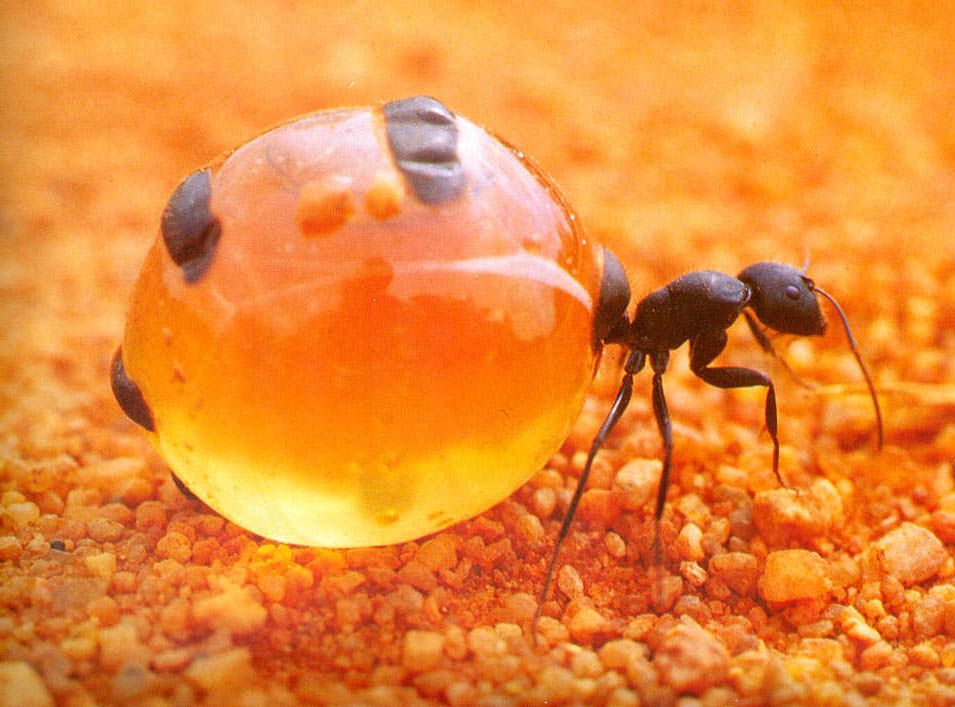
A honeypot ant lives its life collecting honey like a bee. First, it squeezes some smaller insects, called aphids, to steal the aphid’s diet of honey. It stores the nectar in its abdomen. As the Honeypot ant collects more and more honey, its abdomen swells to many times its original size. Then, the ant goes back to the nest and vomits up the honey. Dinnertime!

Weaver ants weave. They use their larva as pins! The larva spit out silk, and so the adult ants actually move them up, down, left, and right. Hard life to be a larva!

One of the most peculiar ant behaviors is performed by leafcutter ants. They grow their own gardens of fungi! First, they mix ant feces (poop) with vegetation, causing fungi to grow. They then eat the fungus! This is part of the reason why they actually cut leaves.

Black ant larva are often ‘captured’ by red amazon ants, so they pretend like they’re red ant grubs by picking up the red ant scent. The red ants then feed and protect the black ant larva. The downside of this is that when the black ant grows up, it will have to work for the red ants.

THE HIGHWAY RULES:

Indian marauder ants make their own dirt roads. These roads can stretch up to 90 meters long. These are their rules:

#1: Move anything edible that gets in the way back to the nest as food. If it’s not edible move it off the road. If you find a worm, call 99 other ants to help you lift it. If you find a seed, call 29 more ants to help you lift it.

#2: Only returning ants are allowed to walk in the middle of the road. If you are venturing out, you must stay on the side of the road – make way for ants carrying food!

#3: MOST IMPORTANTLY: If any other species of ant crosses your way, kill and eat them. ALL!

THE SMELL RULES:

Ants need to recognize different types of scents to know what to do. So this is the smell book for ants:

Alarm smell=> if an ant smells an alarming scent, it can either stay and fight the intruder or run and just evacuate nest until the coast is clear.

Nest smell=> Ants won’t do anything if they smell this. Just normal business.

Queen mating time smell=> male ants will go crazy if they smell this scent. They will be pushing and pulling to get to the queen and a chance to mate.

Predator smell=> if ants smell something they can definitely can’t fight, they will all run and evacuate nest.

Dead ant smell=> the ants around the dead ant might bury him/her, or they might just eat the carcass.

Thanks for reading! -Written by EZ

Orcas

The orca or killer whale is NOT a “toothed whale” or something like that. It’s just a large dolphin! The name killer whale came from ancient times, when people called the orca: killer of whales or whale killers, because of their unusual diet of whales. But, because of a misunderstanding, people now call this brilliant beast the killer whale.

Killer whales are normally 5-8 meters in length, with dorsal fins that can be taller than a grown man! They normally weigh 1390-3500 kilograms. They they have a black backside and a white underbelly. This helps them camouflage. For example, let’s say that an orca pod is hunting a group of seals. It the seals are above and they look down, the black backside of a killer whale blends in with the dark ocean bottom. Also, if the seals are underneath and they look up, then the white belly of the orca will camouflage with the sun above. Smart, right?

Orcas are the most widespread mammal in the world, second only to humans. They live from  sunny, tropical and near-equator waters, to icy, freezing, arctic regions. Wowza! That’s a whole lot of places! Just in the north pacific region zone, there are already 3 subspecies. 1: resident orcas. These, as the names suggest, the resident orca is a north pacific resident. Foods also vary in between subspecies. These racing residents eat fish and large octopi and squid. 2: transient orcas. These orcas do NOT stay in one area for their entire life. These orcas hunt slippery seals and slimy sea lions. They do not use very complex communication strategies. 3: offshore orcas. These orcas eat only fantastic fish, and live offshore. They can be smaller than residents and transients.

Orcas hunt by echolocation… or just good strategy. If they are hunting offshore or in deep waters, the are most likely to use echolocation – the waters are too murky to see through. But, if they are hunting near ballistic beaches, they might have a more interesting strategy. They can first locate a group of sea lion pups in shallow water, then dive back down. They can do this by spy hopping. After this, they gain speed as they charge through the water, straight towards the shore. During this time, the power of the orcas speed may be enough to power a small city. But, won’t the orca get stranded? The answer is: maybe, if he/she hasn’t planned carefully enough. If (s)he timed it just right, however, (s)he will be able to charge onto the shore, grab a sea lion, and wriggle back just before the moisture leaves their body. Whew! Risky for just a meal, right? Here is a less dangerous way of hunting. When orcas are hunting in polar regions, they often target a penguin, seal or walrus on the ice. To get it off, however, the killer whale can either use its tail to start a wave to wash the seal off, or it can tip over the iceberg, making the meal slide off. Easy-peasy lemon squeezy!

You think you were heavy when you were born? No way! An orca is born heavier than an adult, reaching up to 350 lbs when first born. While in its mother’s womb, the baby orca grows fur. But this fur falls off after the orca is born, because swimming with frustrating fur is very frustrating. After 3 months of drinking mother milk, calves start to chomp on some messy meat. Much more yummy! While orca calves are young, they have to be careful when trying to hunt. Some babies get stranded on dry beaches!

People come from all across the world to see orcas. They look in oceans, from beaches, in aquariums, even in amusement parks! They especially like to see orcas breach. Orcas are amazing creatures at every angle.

Thanks for reading! -Written by EZ