Desert plants – living in extreme habitats

Related image
this is a Creosote bush

Plants in the desert have to be well adapted. In a year, there may only be a few centimeters of rain, or there may be a flash flood. In order to seek out water, these plants have some amazing features. Read on to find out what they are!

Plant 1: the Cactus. Cacti are probably the most famous desert plant. A Cactus’s root is spread out, absorbing as much water as possible. After finding water, the cactus will use some up some of it, but will also store a bit of water for later, if there is no rain. Many desert animals will try to get water through a cactus. So, the Cacti have evolved spiky needles all along its body. Ouch!

Image result for cactus

Plant 2: the Creosote bush. This bush’s roots are very alike Cacti’s. It is spread out very far, reaching towards the water in the surface of the sand. Creosote bushes are very easy to eat, but have a bitter, not so yummy taste. Jackrabbits may nibble a few of these leaves if they are desperate or cannot find food. However, Kangaroo rats depend mainly on Creosote seeds. These seeds contain all the water the Kangaroo rat needs – it never drinks water.

Plant 3: the Mesquite bush. Mesquite bushes and trees’ roots dig deep instead of out. Often more than 20 meters long, their roots drill down and down until they find an underground river. These underground rivers often flow to oasis’s – small ponds in the desert. The trees produce a worm looking fruit. These fruit attract all sorts of animals – jackrabbits, antelope, kangaroo rats, and even some predators, like coyotes and skunks.

Plant 4: Welwitschia. What a weird name, huh? Did someone name it just to make it hard for me to spell? Never mind. Welwitschia plants are probably the most unique desert plant. Their roots don’t serve as very useful tools – it’s their leaves. Welwitschia plants have very long, thick leaves that soak up any type of moisture in the air. They live next to rivers or oceans, where the water always releases water into the air around them. Smart!
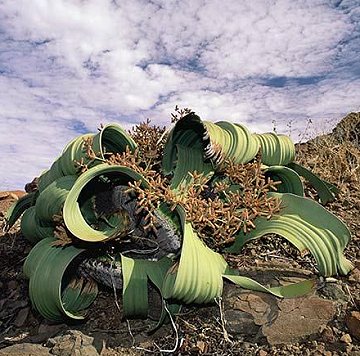
Image result for welwitschia

Thanks for reading! -Written by EZ

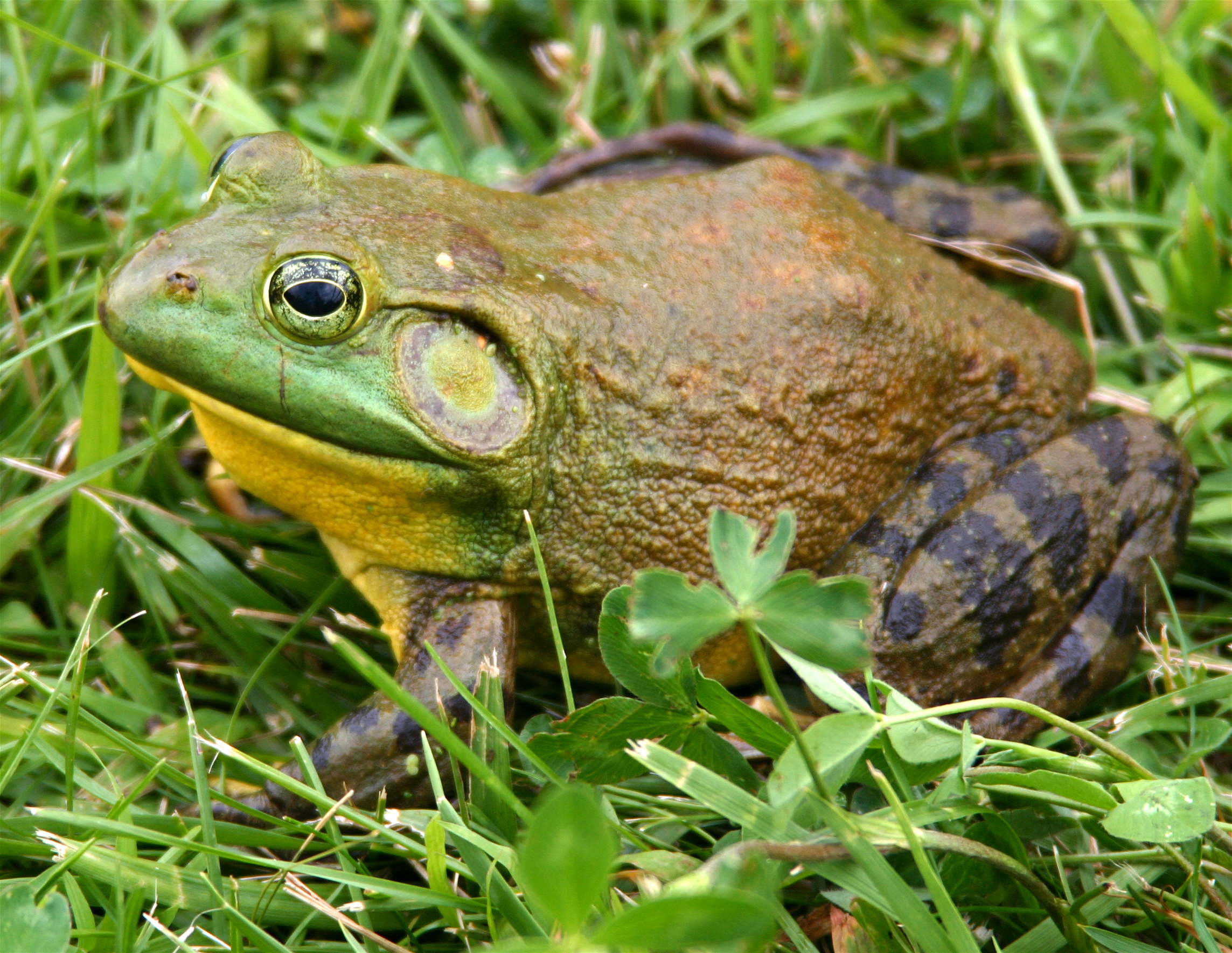
Slimy animals – the Bull/Horned frog

Image result for bullfrog

Some animals, such as dogs and cats, you’d love to cuddle with. But some other ones, like spiders and centipedes, may be a bit less welcoming. The Bullfrog and its cousin the horned frog are in the second group. These 10-20 cm amphibians are the opposite of cute. Keep on reading to find out how!

Bullfrogs’ size varies from 10-20 cm, and they weigh up to 750 grams. Ornate Horned frogs, are slightly smaller, growing up to 15 cm at largest. However, both of these frogs have a feeding habit in common: they are extreme predators. This means that they will eat anything that they can manage to stuff into their mouths.

Bullfrogs use their thick, stretchy tongue to grapple onto small prey, like mice, shrews, and insects. The Bullfrog then chomps down on the prey with its small but sharp teeth. Then, it swallows its prey whole. With larger prey, like snakes, birds, newts, bats, fish, turtles, and other frogs, Bullfrogs don’t bother to use their tongues. They simply hop on top of their prey with their 25 cm long back legs (yes, that is longer than their body) and swallow them alive.

Image result for bullfrog
A Bullfrog is eating another smaller bullfrog

Ornate Horned frogs are more savage. They don’t have a long tongue, so they don’t bother with that. They wait for their prey to come to them. So, O.H.F.’s simply sit down on some leaves and stay there, moving nothing but their eyeballs. Their skin is dappled with leaf like designs, allowing it to be camouflaged. When some prey comes, they frog waits until it is closer. Then, the Horned Frog leaps forward, mouth wide open, and grabs the unfortunate small animal by its head. When swallowing the prey (alive), Horned Frogs push their eyeballs into their body to help. That’s just more gross. An Ornate Horned frog is so obsessed with eating, its mouth takes up almost half its body. Like Bullfrogs, Horned frogs eat small critters and other frogs. If they are very hungry, Parent Horned frogs may even eat their offspring!

Image result for ornate horned frog swallowing
An Ornate Horned frog is also called a Pac Man frog – it eats anything it can swallow

Aren’t they the grossest animals? Well, there are thousands of them! Bullfrogs lay 25,000 eggs per breeding season, and Horned frogs lay 2,000. Looks like there are going to be more…

Thanks for reading! -Written by EZ

Who is the fastest?

Image result for Cheetah
Cheetahs’ claws are worn down from scratching the ground when running, so these cats cannot climb trees, unlike other big cats, such as leopards

Hello! Today, I’m going to talk about which of the animals in the world is the fastest. But, there are going to be a few rules. I’m only going to talk about animals that power themselves forward with muscle, and I’m only counting vertebrates. Let’s get into it!

#1: Land animals. There are two fastest land animals. The first one is the Cheetah, obviously. Cheetahs can run at speeds up to 60 mph (100 km/h) in short bursts. Some things that help them are their flexibility. A Cheetah’s backbone is like a metal wire. Even though it is strong, it can bend opposite directions in one stride, allowing the Cheetah to leap several meters in one jump. Also, Cheetahs’ claws, unlike other cats, are not retractable. They must stay extended, so that the big cat won’t slip during sharp turns. However, Cheetahs can only maintain their top speed for a few hundred meters.

The second one is the Pronghorn. This North American goat relative is by far the fastest marathon runner in the world. They can run 55 mph (88.5 km/h) at fastest (their running style is to bounce up and down), and can maintain a speed of 30 mph for twenty miles. How do they keep going? Their huge lungs. A Pronghorn actively consumes up to 10 litres of air per minute; four times as much as you would breathe if you were its size. Why did it become so fast? Because the Pronghorn evolved almost 10,000 years ago, when there were still American Cheetahs.

Image result for pronghorn running
The pronghorn, a relative of the goat, is often mistaken for an antelope

So, today, I’m going to say the Cheetah is the fastest land animal. It can easily triumph the Pronghorn in a sprint. After all, the only reason the pronghorns evolved such fast-running features is to escape Cheetahs.

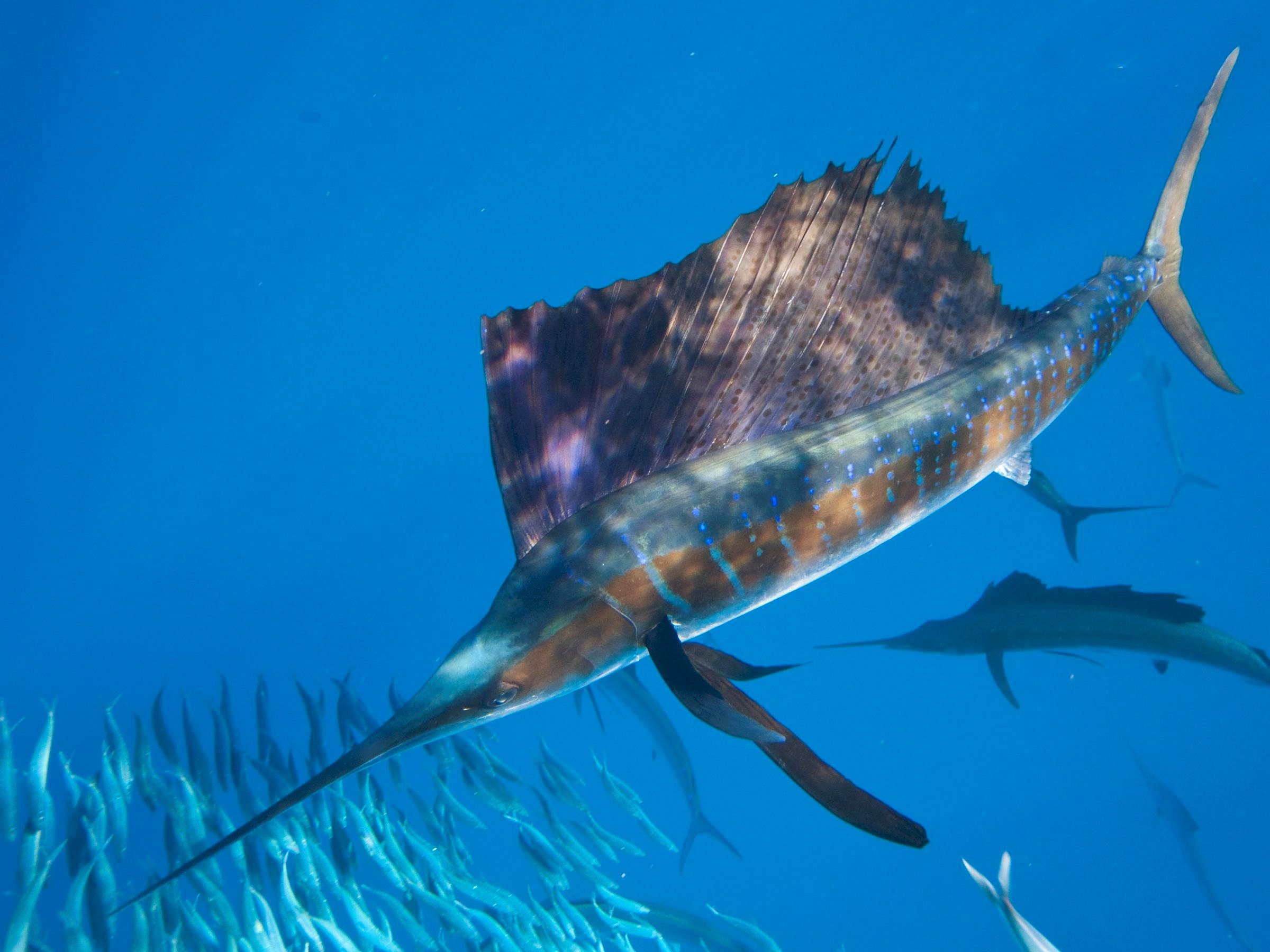
#2: Aquatic animals. This spot goes to the Sailfish. These fast fish can swim at speeds up to 70 mph (112 km/h). It’s superbly streamlined body also includes a sail-like dorsal fin, a spear like upper lip, and a very narrow tail connection. The area where the tail is connected to the body is also a very, very large chunk of muscle. When chasing prey, these muscles allow the Sailfish to put up amazing speeds in short bursts. Long distance chasing is not very useful to these fish. They just need to spear a fish through quickly, then swim away to eat.

Image result for sailfish
A sailfish can change colours depending on its mood or the temperature

#3: Aerial animals. The fastest aerial animal is the… White Throated Needle-tail. This bird can fly at 69.7 mph, just 0.3 slower than the Sailfish. It can maintain its speed for long distances, even when gaining altitude. Not much else to say.

Honorable mention: the Peregrine falcon. This bird of prey (I have talked about it in previous blogs) can reach speeds of up to 186 mph when stooping/diving. But, it had been eliminated when I said that I’m only counting animals that power themselves. Too bad!

Image result for white throated needletail swift
The White throated needletail is the fastest bird in level flight

Thanks for reading! -Written by EZ
Pompeii

In 79 A.D, life was going wrong in Pompeii. Strange odors were rising from the ground, the grapes that were usually great, were now dry. However, life went on, as if nothing had happened. Little did the people in Pompeii know, that soon, everything they knew would be destroyed.

Pompeii was a Roman town next to the great volcano known as Mount Vesuvius. It was relatively wealthy. People there were known for their grape juice. In fact, one of the nicknames for Mount Vesuvius was Mountain for the God. By god they meant the Roman god Bacchus, god of wine, and therefore grapes.

Grapes were one of the reasons people realised that there was a problem. The usual fat grapes were then shrivelled. Also, strange smelling gases were coming out of the ground. However, people acted as if nothing strange was happening, and life went on. However, in August, 79 A.D, mount Vesuvius exploded. It’s volcanic ash, magma, and poisonous gas, killed the mass majority of the population. Some were able to escape on boat, but the rest were either buried alive, choked, or burned to death.

In the 16th century, Pompeii was found. Surprisingly, the ash had managed to keep the surviving buildings from the effects of time. Therefore, this allowed archaeologists to further investigate the lives of Ancient Romans.

Now, the town Pompeii is a landmark that tourists visit regularly. Even though the village is almost completely destroyed, a few ruins still remain. Nobody will ever forget the village that was blown up by the “mountain of the god.” Mount Vesuvius is also a landmark now, and is hiked regularly. On the peak of the mountain, you can still se smoke rising from within, and you also have a brilliant view of the amazing city of Naples.

Small but deadly: Dragonfly

Insects and arachnids are often underestimated because of their size. But, although Dragonflies aren’t poisonous, they are still vicious predators. Even their larva are hunters!

BODY STRUCTURE: Like all other predators, Dragonflies have special body parts to allow them to hunt best. Dragonflies have long, hairy legs, perfect for grabbing prey. They hold the food in position while the dragonfly’s jaws go to work. They are razor sharp, and can slice right through the prey’s exoskeleton. Dragonflies’ eyes are compound, which means made up of many lenses. That means the Dragonfly can see with a 360˚ view. Their four strong wings can fly up to 60 mph (100 km/h) at absolute fastest. But, they can also fly independently, allowing the Dragonfly to fly at any angle, even backwards.

LARVA: Dragonfly larvae are called Nymphs. They hatch out of eggs that were laid on the water, and they stay underwater until they grow wings. If a Nymph is in the water, it often feeds on fish. It waits for a fish to come by, then unleashes its secret weapon. A dragonfly Nymph’s jaw can launch out of its body. When it does, the Nymph grabs the fish in an instant and grapples onto the prey. It then brings the fish back to eat.

LIFE CYCLE: A Dragonfly lives for approximately 7 months (not including their nymph stage). They are born underwater, as eggs. When they hatch they are called Nymphs, as I said. They may live many years underwater before emerging from the water. During this stage, they may have to moult as many as 17 times before growing wings. The change is an incomplete metamorphosis. When they finally become adults, they will only live for a few months before they die.

Thanks for reading! -Written by EZ

Boston Tea Party

In 1773, the American Revolution was to begin. Do you know what was one of the primary reasons why the Revolutionary was was started? Because of the Boston Tea Party.

The Boston Tea Party was triggered by a tax the British set known as the Tea Tax. The Americans were already displeased because of the taxes, but this one triggered one of the most devastating revolts.

The Boston Tea Party was where many people who lived in Boston, went to hear the Sons of Liberty (a group of revolutionists) talk about solutions to the Tea Tax. Earlier that week, a shipload of tea was brought into Boston. The Sons of Liberty were discussing this problem, and in the end, they decide to burn the tea.

When the British heard of this, they were outraged. They sent troops into Boston. They had hoped that this would stop the rebellion, instead this triggered more and more commotion. This led to one of the first battles in the American Revolutionary War: Battle of Bunker Hill.

That resulted in the start of the American Revolutionary War. Although there were many casualties on both sides, in the end, the people of America prevailed. Just remember. this all started with a single Tea Party in Boston.

Written by Dz

Mount Everest

In 1953, Great Britain climbers set out to climb the tallest mountain in the world: mount Everest. Multiple country’s crews had attempted, and failed, to climb to the peak of the world. Now, one of the world’s most powerful nations, were set out to climb. Would they succeed, or would they come to the same fate as the rest had.

Mount Everest stands at 8,850 meters above sea level. It’s located in the Himalaya mountain regions, which is part of China, India, and Nepal. The locals there are called Sherpas, and they are guides for the climbers.

The climb begins on the morning of March 10, 1953. Each day, you have to get to a certain place on the mountain, for shelter and food. However, the path there isn’t easy. You risk dying from avalanches, falling, lack of air, and so many more. There is even a zone with so little air, that they call it the “death zone”. You can only survive at that hight for a most of 3 days.

Soon, you face one of the most challenging parts of the climb. The Khumba Icefall. This is a moving river with ice blocks on it. There are deep cracks in between the ice blocks, and one misstep can lead to death.

On May 29th, two people from the crew reach the top. Their names are Tenzing Norgay and Edmund Hillary. In honer of Hillary, the last step until the summit is now known as the Hillary step. This is because Hillary stepped on it first.

Nowadays, it is not as big as a challenge, because of modern day technology. But back then, it was a challenge of the lifetime. Now, over 4000 people have reached the summit, but the world will never forget Hillary and Tenzing, for being the first people to reach the peak of the world.

Winston Churchill, a biography (part 9, the end of a great life)

After world war 2 ended, Clementine thought Churchill was ready to retire. But, Churchill wasn’t done yet. He still wanted to help his country, to urge it forward. So, when he wasn’t re-elected the prime minister, it came as a huge blow. But, stubborn Winston still didn’t give up. The Conservatives kept him as leader. He finally was re-elected prime minister at age 77. He was ready to aid his country again. But, his health wasn’t so well. He had recovered from a massive stroke, and he kept on going on as PM. Finally, Clementine persuaded Churchill to retire at age 80. After Churchill retired, he lived a calm, happy life in Chartwell with Clementine. At last, ten years late, at age 90, Churchill suffered another stroke, and this time he didn’t recover. People around the globe came to see this remarkable man.

The end.

Thanks for reading! -Written by EZ

Credits to “Winston Churchill” by Katie Daynes.

Winston Churchill; a biography (part 8, WW2)

“I have nothing to offer but blood, toil, tears and sweat,” Churchill said, during his first speech after becoming Prime Minister. He gave many motivational speeches that kept his people going throughout the entire war. Churchill then made many trips to France. France had been in war with Germany recently, and Winston persuaded them not to surrender. But, 300,000 French troops were successfully rescued after their country was finally taken over by the Nazis. Now, a large portion of central Europe was now fighting for the Nazis or under control of them.

But, now that France was under Hitler’s control, all he needed to do was cross a narrow channel of water to get to the UK.

“We shall defend our island, whatever what the cost may be. We shall fight on beaches, we shall fight on landing grounds, we shall fight in the fields and in the streets, we shall fight on the hills, we shall never surrender.” This was another speech that Winston made as Germany’s planes bombed their country. UK was currently the only country fighting the Nazis in Europe. Churchill desperately asked Russia and US for help, but they didn’t want to go to war just to help someone. Even Churchill was running out of positive words now.

Then, in the next year, everything changed. Hitler had declared war on Russia, and Japan – a country helping the Nazis – had bombed pearl harbour. Finally, America and Russia had to join.

In the months that followed, World War 2 had reached its peak, and the world was full of chaos. Even when commanding troops, Churchill and Roosevelt had been planning a mass attack on the French coast. Winston himself had wanted to be there, but the king of England wouldn’t allow it. Then, when the time came, American and British troops massed on the coast, and started pushing back the Nazis. The Nazis’ momentum had been lost.

Finally, on May 8th, 1945, victory was declared. Clementine was very grateful, and begged Winston to retire. But, he wasn’t done in politics yet.

TBC once more in future blogs…

Thanks for reading! -Written by EZ

Hindenburg

It is 1936, and the Hindenburg, the largest airship in the world, is about to take off. Back then, the way to travel in air was airship. This was the newest and largest one yet. Today, I will tell you about the Hindenburg, and take you on a tour of the largest airship back then.

There was a german airship company called Zeppelin airships. They were developed by a nobleman called Ferdinand von Zeppelin, hence the name. They had been designing and flying airships since 1900. Zeppelin also formed the world’s first airline: the Delag.

In 1931, they start working on arguably their most famous project: the Hindenburg. It is 245 meters long, and 41 meters wide, larger than any airship built before. There is a crew of 61. There are drivers, engineers, mechanics, and electricians. For the passenger’s delight, there are cooks and stewards.

In 1936, the Berlin olympics are being held. At that time, Adolf Hitler had absolute power over Germany. He, and his third Reich, (later known as the Nazis), had supplied money, therefore, one of the Hindenburg’s first flights were over the crowd of the Olympics.

Let’s move into the inside. The place was designed for the passenger’s happiness. Everything is clean, and there is a lounge. There are comfortable cabins, with two beds each. There is a reading and writing room, with typewriters. There is a luxury restaurant. Chefs tell people that the kitchen goes through 440 pounds of meat, 220 pounds of butter, and 800 eggs on a trip (three days). It had a magnificent view over anything it flew over. In other words, this was a luxury flight.

On the 37th flight, the Hindenburg sadly came to an end. It was on a flight to England. On a stop in New Jersey, it stopped for several hours in delay, waiting for a storm to pass. Then, after they took off again, the back of the airship caught on fire, and the airship fell from the sky.

That’s how the greatest airship of all time came to an end. In a tragic crash, in New Jersey. However, up till this day, people still remember the Hindenburg, the largest airship ever created.