The Henley

During the American Civil War, the first successful war submarine was built. It was known as the Henley. In it’s short lifespan, it went on 3 missions for the Confederate side.Before this, submarines had been made. Though they had not been very good, they still functioned, sort of. However, this one not only functioned, but it did something for the Confederates.

On the Hunley’s disastrous first attempt, the ship sank. The captain, John Payne, tangles himself in the mooring lines. In attempt to get out, he stepped on the dive panel. Once that happened, the ship dived in. However, they were not ready yet, and water flows in. The crew desperately try and escape from the submarine. Still though, most of the people drowned. It was later recovered by salvage boats.

On the second attempt, it was a success. However, it was a test, and didn’t provide anything to the Confederates. They tested it on a real friendly ship, with a fake bomb. They went underneath, and shot it.

The third attempt could be considered a suicide mission. There was a stick, with a torpedo on it. They jammed it directly onto the Union

Black Holes

As you most probably know, there has recently been a major picture released. It is the first picture of a real black hole. Due to the release of this picture, I find no better time than to write about black holes now.

The theory of a “dark star”, has been around for more than 200 years. The theory was first made by a scientist called John Michell. The idea was revolved around, but the first breakthrough came when a scientist you’ve probably heard of, called Albert Einstein came along. Einstein developed a theory known as general relativity. A few months later, Karl Schwarzschild solved the theory, proving it not completely correct. Hendrick Lorentz came up with the same solution afterwards.

Afterwards, through the course of almost a century, what a black hole is, was developed. It is a massive star compressed into a tiny space, making it a gravitational force that nothing, not even light, can escape.

Now, recently, the first ever black hole picture has been taken. It was taken using super cameras. It takes about 55 million light years to get to the black hole. That’s how long it takes to take the picture. The picture was mostly credited on the women called Katie Bouman, who designed and hardwired the cameras.

Thats the history of the black holes for you. I hope you now know what the mystery of black holes is about.

Written by Dz

When are you awake?

Image result for animals

Animals often sleep and wake up at different times. Us humans are awake in the day and asleep in the night, but not all animals are this way.

There are four parts to a day. Dawn, Day, Dusk, then Night. In each section, there are at least twenty species of animal active. So, I’ll show you some of them.

#1: Day. Animals that are awake during the day are called diurnal. Most of the animals in the world are awake during day. This is because their eyes, like ours, haven’t evolved to see in the dark very well. So, they will wake up in the day and borrow the light of the sun. Some examples of diurnal animals are humans, giraffes, deer, gorillas, and lizards. Some reptiles come out during daytime because it is much warmer than at night. (Their body temperature depends on the environment.

#2: Night. Nocturnal animals are the ones awake at night. Unlike diurnal animals, nocturnal animals have especially evolved very sharp eyes, that can see perfectly well when there is a limited amount of light. Some of them are small creatures that are trying to avoid competition with larger diurnal creatures. Some other ones come out at night because their prey does. Some examples of nocturnal animals are bats, owls, and aye-ayes.

Image result for nocturnal animals real life

#3: Dawn and Dusk. When animals are awake at dawn or dusk are crepuscular. They aren’t actually only awake at dawn and dusk; it’s just that they are the most active during that time. Most crepuscular animals stay active at dawn because they don’t like the heat of the day or the cold of the night. For example, desert animals are often crepuscular because it is too hot during the day and too cold during the night. Some examples of crepuscular animals include lynxes, bobcats, ferrets, jackrabbits, and even those giant rodents called capybaras.

Image result for crepuscular animals real life

Now comes those weird ones. Some animals don’t sleep a long time at once – they are resting and active all along the clock. For example, lions often hunt during night time because of their sensitive eyes. But you’ll also often see them eating and hunting during day. But, they will snooze during both parts of the day as well. With this type of animal, I have no idea.

Thanks for reading! -Written by EZ

Animal Armor

Image result for pangolin
Pangolin

Predators have weapons, right? So, in order to protect themselves from those weapons, herbivores (prey) need armor. Herbivores have evolved many different effective and amazing types of protection.

Armadillo

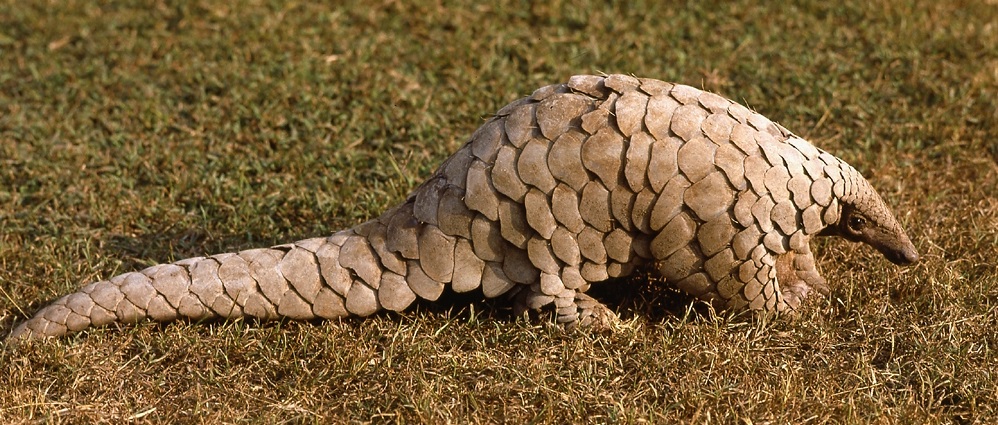
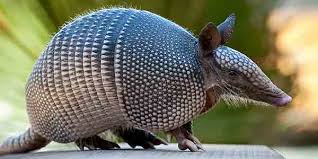
My favorite type is plate armor. This type of protection is used by armadillos and pangolins, except their types of plate are a bit different. An armadillo’s armor is made up of rough little plates of bone that occasionally overlap. Armadillo armor is split up into four chunks – head plate, ‘shoulder plate’, middle section, and ‘rump plate’. Pangolins’ armor looks quite a bit different. They are made of sleek, black or brown scales. These scales are made up of the same material as your fingernails – keratin. The scales cover their entire back and side, like a fish.

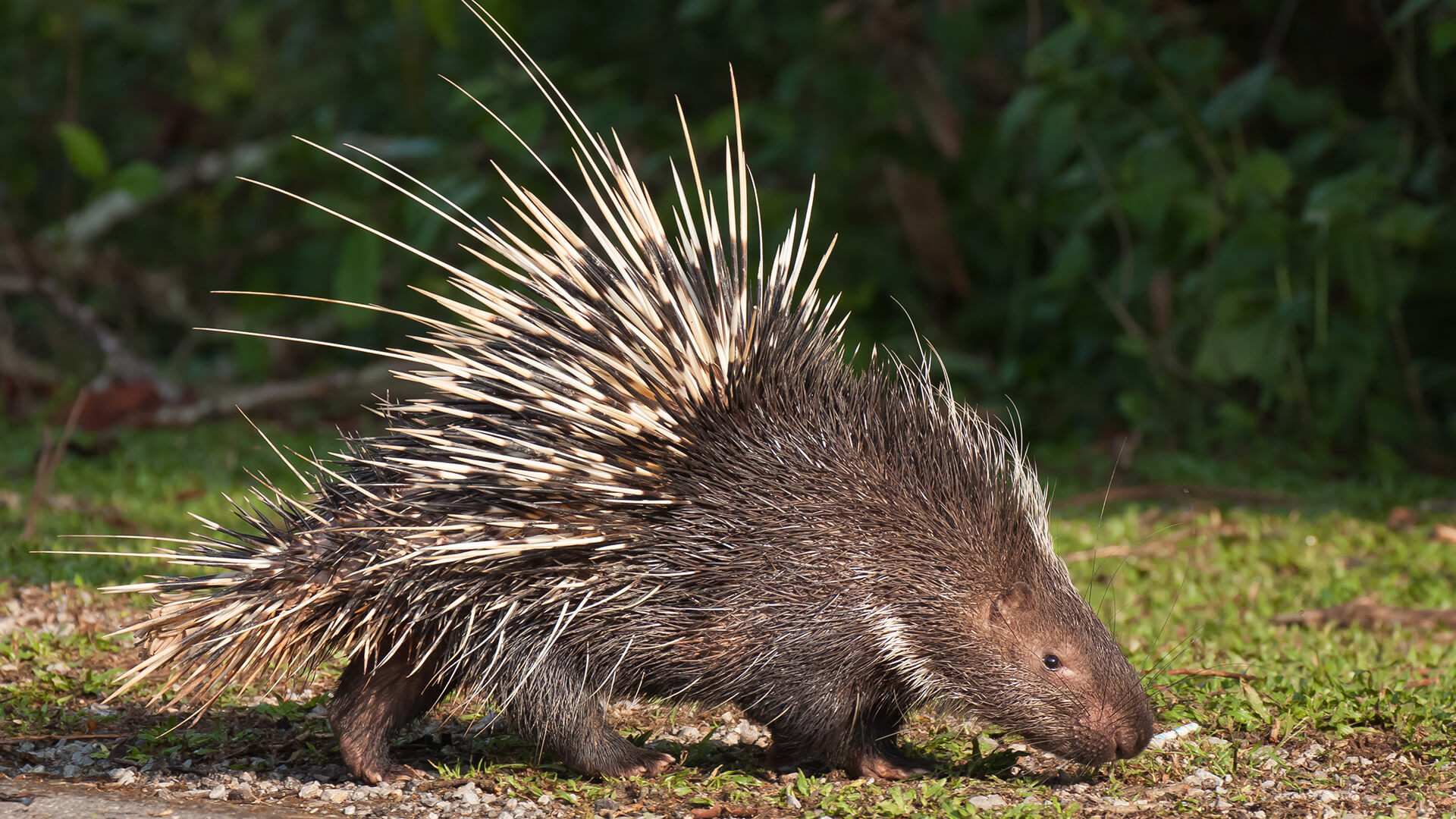
Next up is quill armor. This is probably the most effective. It is used by porcupines and hedgehogs – spikes on your back. The spikes/quills are made up of keratin, but hedgehogs use their spines a bit differently than porcupines. When threatened, porcupines will pivot and face their predator with their back. On the other hand, hedgehogs roll up into a ball and stay there when they sense danger. Also, porcupine quills will come off the animal itself and stay on the predator. Hedgehog spines are much harder to dislodge.

Image result for porcupine
Related image

Spine armor is the most unique of all. Although it is inner armor, it is still incredibly strong. Small animals are afraid of being stepped on, right? So, the hero shrew has evolved an incredibly strong spine to withstand the weight of anything up to 140 pounds. Wowza! Especially considering they only weigh 250 grams.

Thanks for reading! written by EZ

Amazing things that rats can do

Rats are evil animals, but they are still wondrous. They can do many, many things us humans can’t. I’m going to share some of those things in this blog.

Superpower 1: Rats can amazingly, jump from a five story building and survive, and even land on their feet! Like a cat, the rat uses its tail to balance while falling, enabling it to twist and turn until it gets into position… in midair!

Superpower 2: Rats’ bodies are extremely flexible. The reason for this is their body shape. Shaped like a cylinder, rats’ bodies are the perfect shape for squeezing through small holes and cracks. The can also extend their body from 15 cm (original) to 33 cm. The record for smallest hole that a rat can fit through is 2.7 cm in diameter. However, overweight rats cannot do this, because they have an extra ring of fat around their stomach.

Superpower 3: Rats are actually amazing swimmers. They can survive being flushed down a toilet, and swim up to a mile! How do they do this? A rat’s legs are actually quite strong. They can allow the rat to tread water (stay afloat by kicking) for up to THREE DAYS! They may also hold their breath for up to 3 minutes.

Superpower 4: A rat’s teeth are amazingly durable. They can gnaw through almost any material that is commonly encountered, such as lead, brick, and concrete. They mostly nibble away at it with their large front teeth, eventually forming a hole.

Superpower 5: Rats are like poison detectors. When eating, a rat can detect poison one millionth the weight of the entire meal. They can also feel it in their stomachs, and cough it up later.

Thanks for reading! -Written by EZ

Sharks, and how to avoid them

Image result for sharks

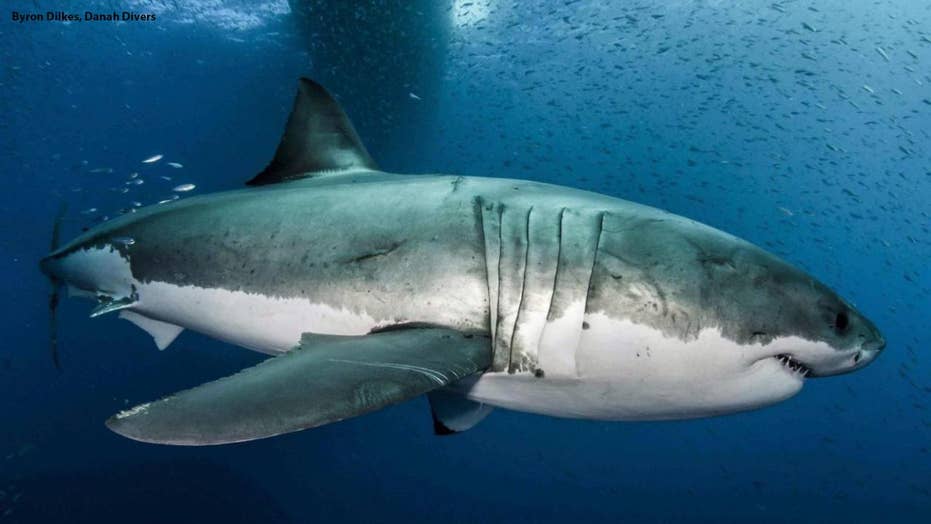
Sharks are probably one of the most feared predators in the world. Though deaths are rare, sharks will attack humans often. In 2018, there were up to 100 injuries due to sharks. In order to avoid them, you will need to know some things about them, like what they are attracted to. I’m going to talk about what things are attractive/not attractive to sharks.

Here are some random objects. I’m going to write about which ones are attractive and not attractive after you take a guess.

#1: Sheep (dead) #2: The color yellow #3: a sword #4: Blood #5: Shampoo #6: a surfboard #7: your pet seal #8: a good luck penny

Let’s start with the most obvious ones. #4 is obviously attractive. Most aquatic predators can sniff out a tiny little drop of blood. A shark can smell a drop of blood in an Olympic swimming pool, so, you better watch out!

Next is #7. Obviously attractive! (If you have a pet seal). A shark’s favorite meal is seal, so if you are carrying one next to you it would obviously be interested in you (not in a good way) as well. #6 is also attractive. Surfboards are built to be very streamlined. But, sharks often mistake these for seals due to their shape, and will eagerly take a bite out of it.

Now, number 2 is just random. But, it is attractive. Some people call it ‘Yum yum yellow’ just to prove the point. But, if you are wearing anything brightly colored in dark waters, a shark will mistake it for a colorful fish. Shiny things, such as coins, also look like fish scales, so you might not want to bring #8.

Image result for yum yum yellow
a shark has been attracted to a bright yellow canoe

Sheep? Not attractive to sharks, but dead ones might be. Next!

#5 is not attractive. Imagine eating your shampoo. Gross! But sharks hate it for a different reason. They hate the chemical ‘Lauryl Sulphate’ that is included in shampoo. So, you can bring a bottle of shampoo as a weapon if attacked. ๐Ÿงด

#3 is… attractive. First of all, a sword well most likely drag you down, and probably drown you if you hold on. Second of all, sharks can detect electrical currents, remember? So, don’t think a sword would protect you!

Thanks for reading! -Written by EZ

Warty Warthogs

Image result for warthog

Warthogs are one of those ‘not so cuddly creatures’. They actually have warts on their faces! And, after all, they are part of the pig family, none of which are very cute. Despite their appearance, however, warthogs aren’t boring.

WARTHOG GENERAL STATS: A warthog is quite a large pig. They are 1.1 – 2 meters long, including their tail. They may weigh from 50 to 150 kg. Their lifespan is up to 11 years.

BODY FEATURES: Warthogs may look ugly, but they are actually pretty swift runners. They have long, muscular legs and a tail that sticks up when they run. Warthogs also have a large, thick head, completed with two tusks growing up to one foot long on each side and ‘warts’. These pigs have a mane running down its back all the way until its butt.

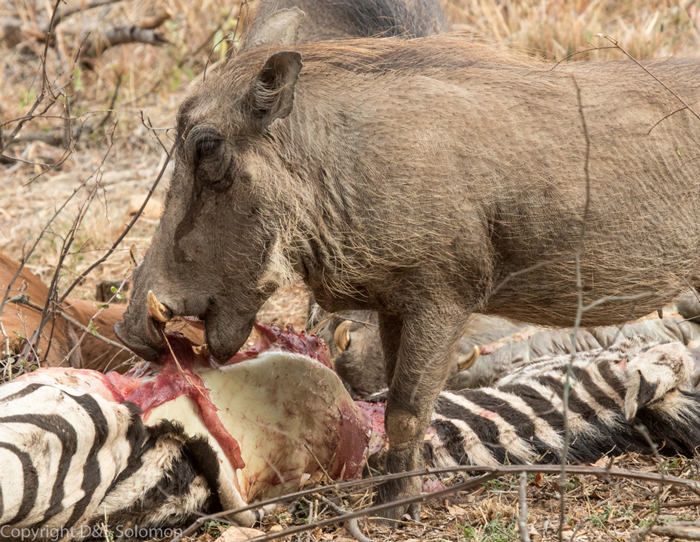
FEEDING: Warthogs, like all other hoofed mammals, are herbivores. They kneel down on soft knee pads and lower their long head to graze. This way is a very efficient way to chew grass on the open grasslands that Warthogs live in. They nip off the grass with soft lips and chew with thick teeth. During the dry season, Warthogs dig out underground roots and plants with their snout. They may occasionally nibble dead animals that were abandoned by other predators, but they are actually looking for insects and grubs hidden inside.

Image result for warthog
Related image

BREEDING: Warthogs live in dens underground. The burrows are mostly stolen from aardvarks, but may be dug by the Warthogs themselves. The gestation period of a warthog is the longest out of any pig – up to half a year. After the long wait, 1-7 piglets will be born. The average litter size is 3. When the baby warthogs need to stay in the den, they are vulnerable to predators who may stumble across the den.

Image result for warthog baby

FIGHTING AND RELATIVES: Male warthogs will compete for a mate during the mating season, like most other animals. There are two types of fighting amongst pigs – lateral and head to head. Pig species with long, thick heads and ‘warts’ perform head to head fighting. This is when two pigs charge at each other and hit head on. They are only trying to push each other off balance, so the results aren’t devastating. In fact, a Warthog’s warts are actually things that will protect the pig when fighting. Lateral fighting is usually performed by pigs with slightly shorter, more slender snouts like wild boars. They use their shorter tusks to slash at each others’ shoulders. This is far more dangerous than head to head fighting.

Thanks for reading! Written by EZ

Mountains

Image result for Dome Mountain
Dome mountain

Mountains are big, giant lumps of rock. Right? Not exactly. They didn’t just appear there, and the whole thing may not be of rock. They were formed by things millions of years ago. And more are forming today! Read on to find out how.

#1: Fold mountains. Fold mountains are jagged, fang like mountains that stick out of the ground. They form when two continental plates collide and squeeze. The crust being squeezed then gets ‘folded’, creating a fold mountain. Fold mountains are by far the most common type of mountain. The Alps, Andes and Himalayas are all fold mountains. Most of them are still rising, due to ‘continental squeeze’.

Image result for fold Mountain
The Matterhorn is a fold mountain

#2: Fault block mountains. These mountains are chocolate bar shaped. They form when one crust plate squeezes downward. So, as the plate squeezes and slips down, little by little, the neighboring plate gets pushed upwards, creating a block-ish mountain.

#3: Dome mountains. Dome mountains are dome shaped (obviously). They are not formed by ‘continental squeeze’ if that’s what you were thinking. These form when magma tries to push upward, beyond the crust, but doesn’t quite succeed to break through. The only thing it does succeed in is pushing the middle of a plate upwards, forming a dome mountain.

#4: Plateau mountains. These mountains are formed in a similar way to Dome mountains. When a mass of magma pushes upwards, it creates a flat plate of rock a few hundred meters above ground level. Then it dries, leaving the plate up there. Then a plateau is formed.

Image result for plateau mountain
This is a plateau mountain

Thanks for reading! -written by EZ

Mummies

In Ancient Egypt, people prepare for their deaths for a very long time. They aren’t afraid of death, instead, they believe that after death, they go into afterlife. However, in order to go into afterlife, you must become a mummy.

A mummy is a dead body that is preserved in Linen. Many wealthy people preserve Linen for a lifetime, just to prepare for the afterlife. It’s incredibly expensive to become a mummy. You need to pay to have your inner organs removed, and to have yourself preserved.

The first step is to dry you up using a form of salt known as Natron Salt. It shrivels up your body, therefore, your organs will be easier to cut out. Your liver, stomach, intestines, and lungs are cut out, and put into separate jars. After a certain amount of days, the people fill you up with stuffings, to make you seem alive. Afterwards, you are wrapped in the Linen that you have been collecting for a very long time. Finally, you’re body is prepared for afterlife.

Your body might be prepared, but you still need things in afterlife right? Your tomb is filled with riches that you have. Sometimes, your pets even get mummified to keep you company in the afterlife.

Another part of the mummification process if getting a coffin. The coffin is usually made of wood, and if you are wealthy enough, you might even have a mask, or a face painted onto your coffin. Often, wealthy men even get more than one coffin, even if it’s completely unnecessary.

Thats what life was after you died in Ancient Egypt. I bet you wouldn’t want to be a person back in Ancient Egypt. I certainly wouldn’t.

Written by Dz

Sinister Spiders

Spiders are the ideal ‘creepy bug’. They have eight, hairy legs, up to eight beady eyes, and a pair of deadly jaws. But, not all spiders are like this. Today, I’m gonna show you different kinds of spider.

#1: Web casting spider. Everybody knows them. They are the spiders that build a web, and wait for their prey to fly into their net. These are also the most common type of spider. They have carefully planned out a web that will be most attractive/affective, even if it looks bizzare. The most infamous type of web builder is the Black Widow.

#2: Jumping spider. T First, they scuttle out of their home to look for their prey. Jumping spiders most likely have at least four eyes. Their front, depth perceiving eyes help judge distance, while their side eyes help them look around at their surroundings. (Read ‘different types of eyes to find out more). Once they track down their prey, they crouch down, then jump onto their prey. Jumping spiders can jump many times its own body length, making it hard for prey to escape.

#3: Net building spider. These spiders are quite active. First, they weave a net out of silk. Then, they go around, scrounging for prey. Once they pick a target, the spider will slowly lower itself above its prey. Finally, the net building spider will throw its net at the unsuspecting insect, capturing it.

#4: Labyrinth spider. These are some of the most lazy spiders. They build a funnel shaped net, then wait inside. When they feel vibrations along their house, they will go to the entrance to check. If there is prey stuck, the Labyrinth spider will happily eat it. If it was just some other animal, the spider will keep waiting.

#5: Trapdoor spider. These moderately large spiders are probably the rarest of the spiders. They simply dig a burrow underground or on the side of a cave, and leave a trapdoor at the entrance. If the trapdoor is touched by an edible insect, it will charge out and grab its prey.

Thanks for reading! -Written by EZ